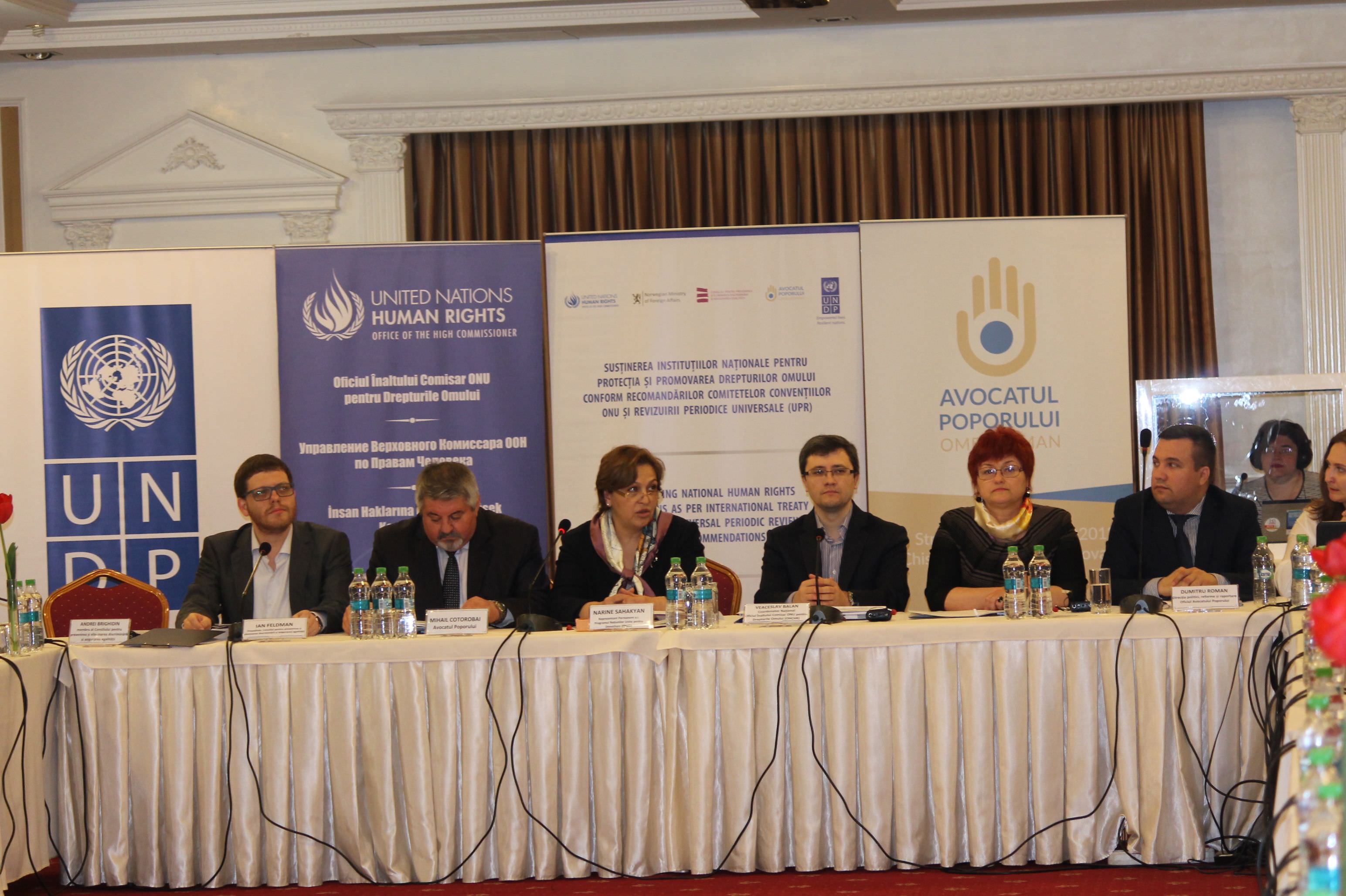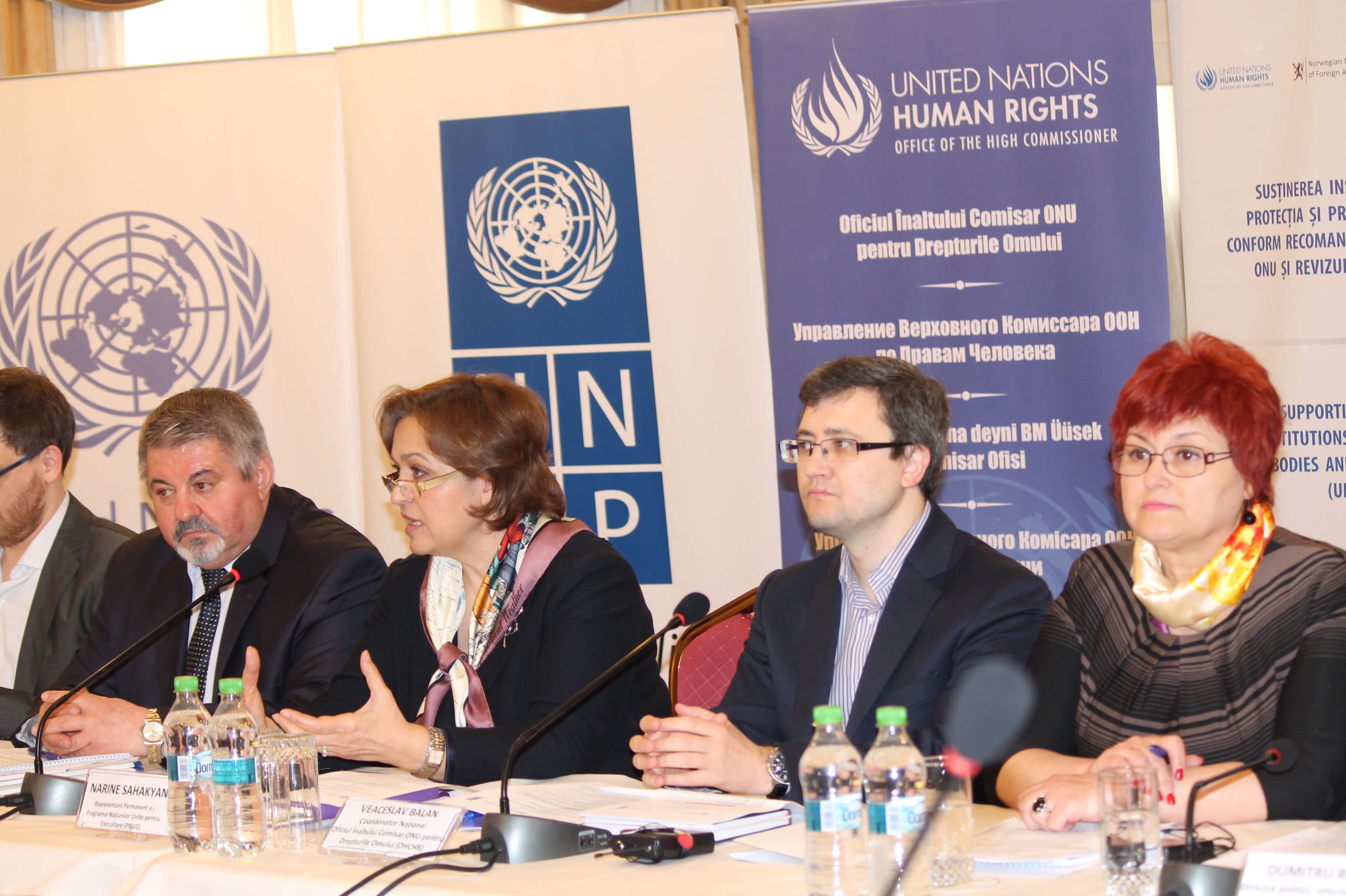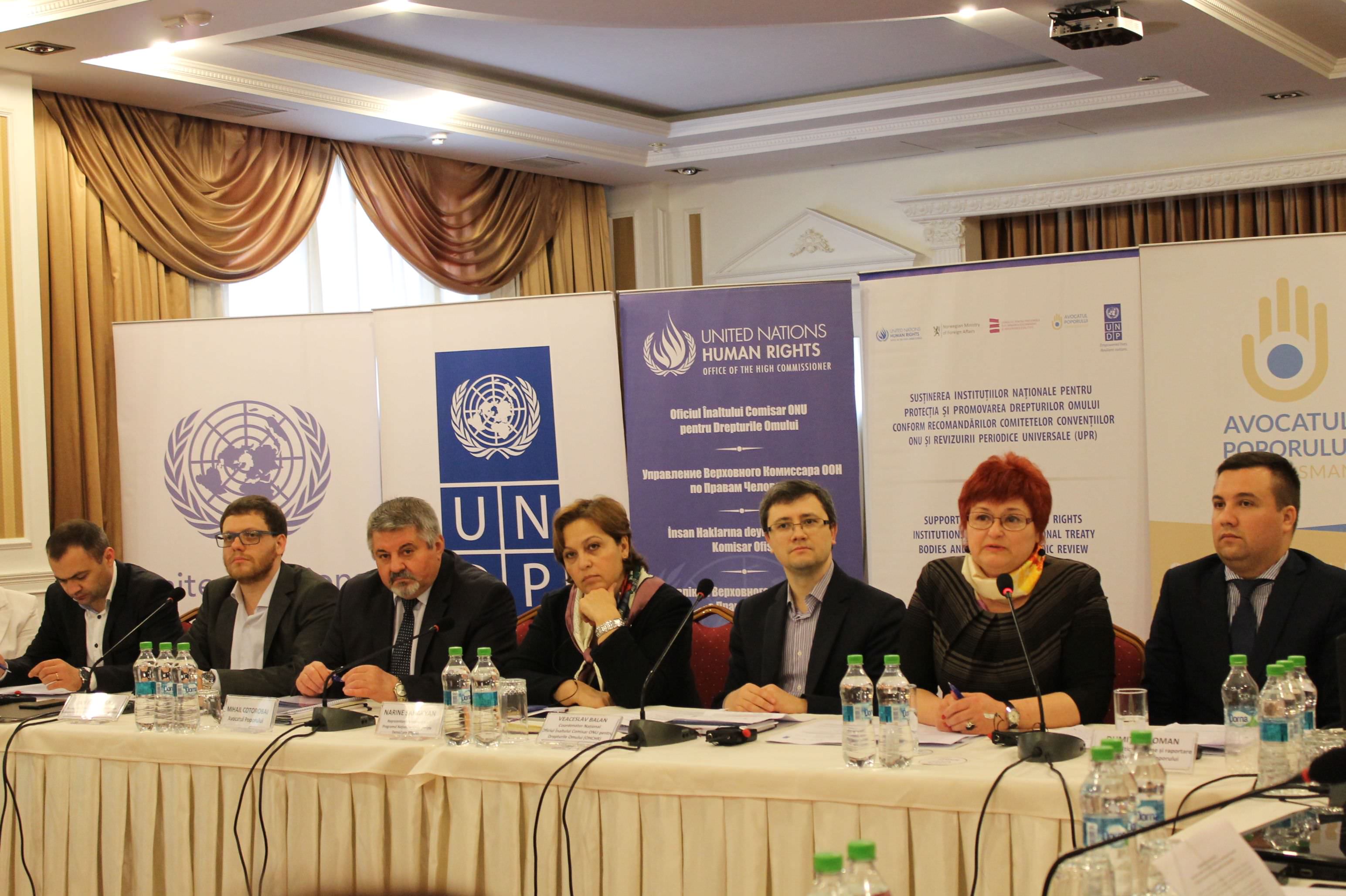
The achievements of the authorities in the implementation of the 122 recommendations made within the first cycle of the Universal Periodic Review (UPR) are modest. Therefore, many of them have been reiterated in the reports of the National Human Rights Institutions (NHRIs) and the civil society for the second cycle of UPR. Statements in this connection been made within the National Conference “Human Rights in Moldova in the Context of the Universal Periodic Review (UPR): Recommendations and Prospects”.
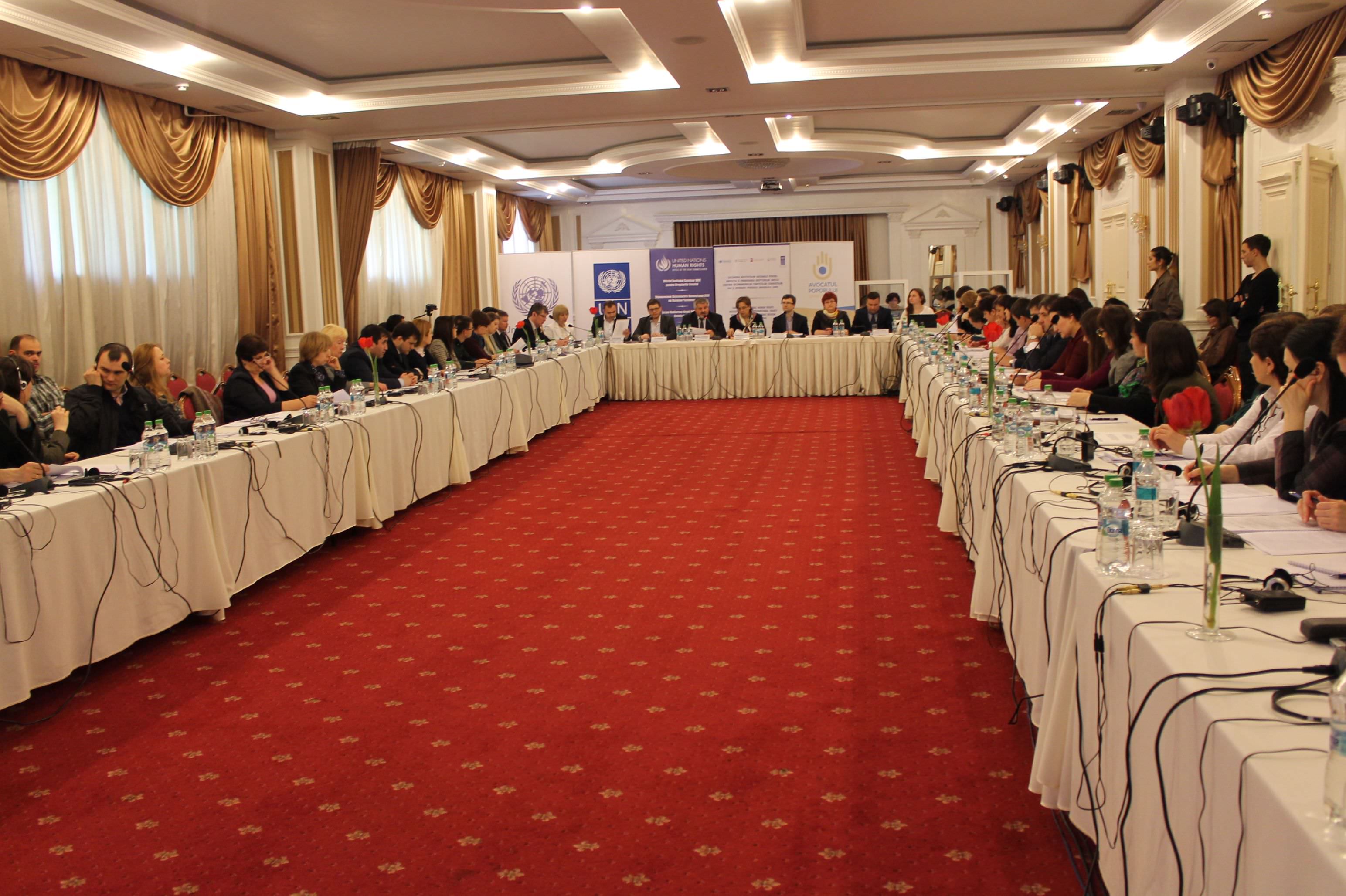
The event featured a public dialogue on the alternative reports for the 2ndUPRcycle filed to the Council for Human Rights by the Ombudsperson’s Office, the National Council on the Prevention and Elimination of Discrimination and Ensuring Equality, the civil society, and the UN agencies of Moldova.
The meeting was organised within the project “Supporting National Human Rights Institutions as per International Treaty Bodies and UPR Recommendations”funded by the Ministry of Foreign Affairs of Norway, co-funded and implemented by the United Nations Development Programme (UNDP) in Moldova and the Office of the UN High Commissioner for Human Rights (OHCHR), in cooperation with the Ombudsperson’s Office and the Council on the Prevention and Elimination of Discrimination and Ensuring Equality.
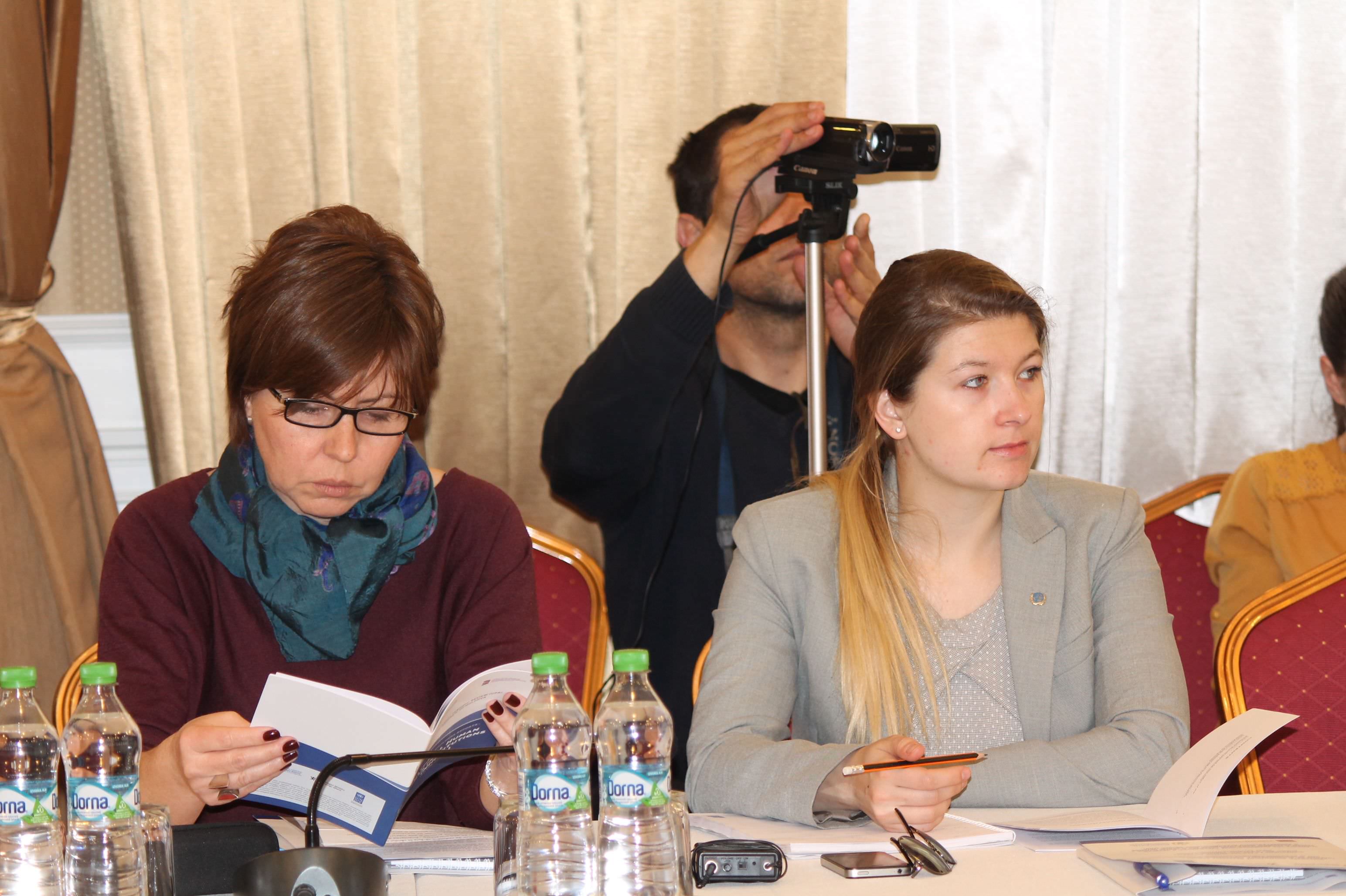
Eighty-two people, representatives of NHRIs, civil society, central public authorities, embassies, and international institutions accredited in Moldova took part in the meeting.
The findings and recommendations of the NHRIs, the civil society, OHCHR, UNICEF Moldova, and the National Office of the United Nations High Commissioner for Refugees (UNHCR) were presented during the event.
Both the organisers and the participants noted the novelty of the event and the importance of the discussions. They expressed their hope that the dialogue initiated on this topic would be continued in the context of some national consultations on the state report for the 2ndUPRcycle.
UNDP Resident Representative, Narine Sahakyan, acknowledged the active involvement of the NHRIs and the civil society in the development of reports for the 2nd cycle of UPR, mentioning that it is important for the authorities to take into account the proposals made.
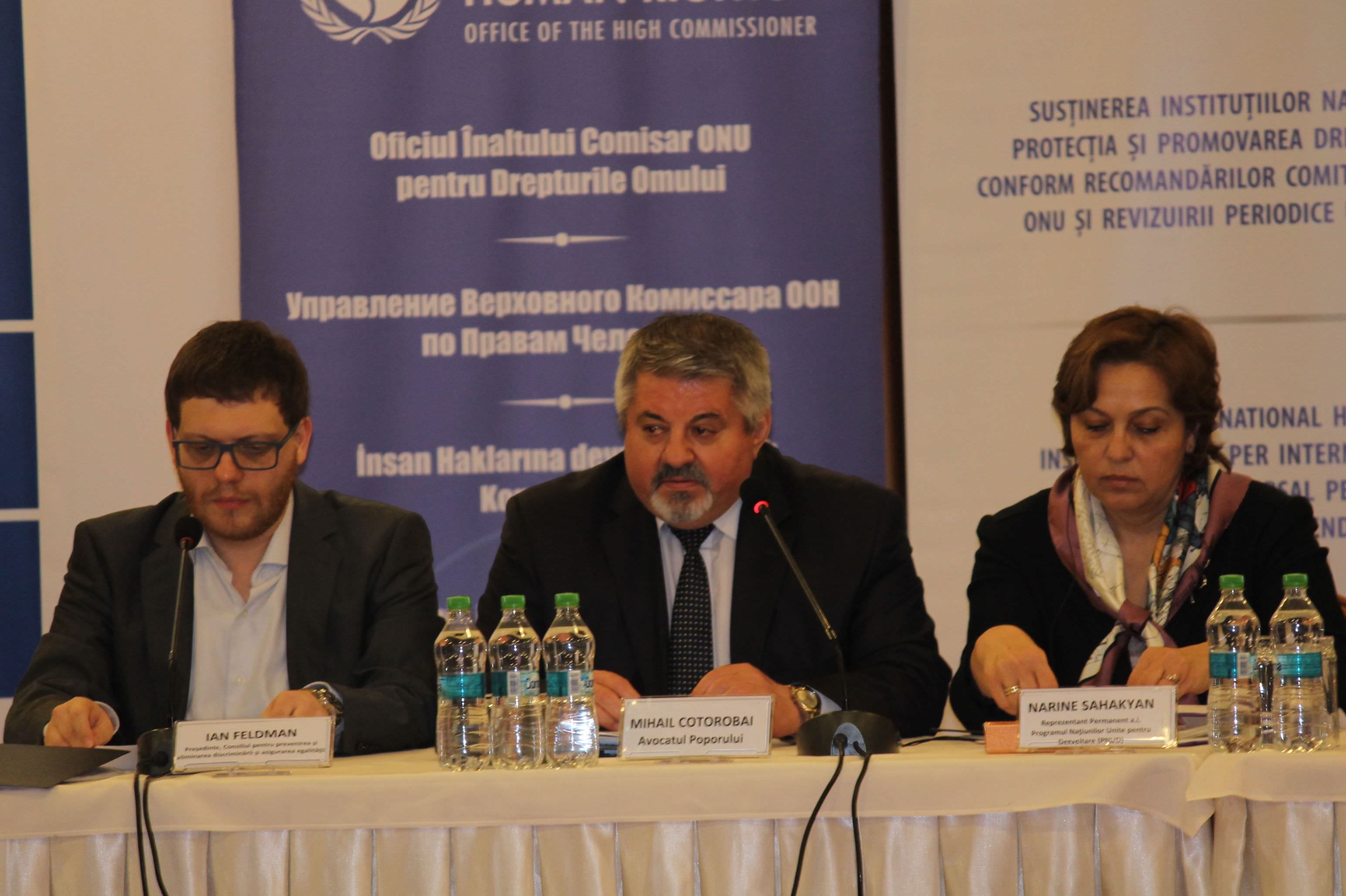
The ombudsperson, Mihail Cotorobai, noted that this is the second report prepared by the Ombudsperson’s Institution for UPR, and the key subjects have been identified within two rounds of consultations with the civil society. He also mentioned that the event takes place in an extended format, with representation of the most important human rights actors. He expressed hopes that the evaluations and conclusions made within the event will be of real use to the authorities in the development of the National UPR Report, which has to be sent to the United Nations Human Rights Council in July inst.
The chairman of the Council on the Prevention and Elimination of Discrimination and Ensuring Equality, Ian Feldman, mentioned that it is for the first time his institution has developed and would send a Reportfor UPR to Geneva. He also expressed hopes that the Council report and other independent reports will be considered by the authorities as opportunities to improve things in the area of human rights.
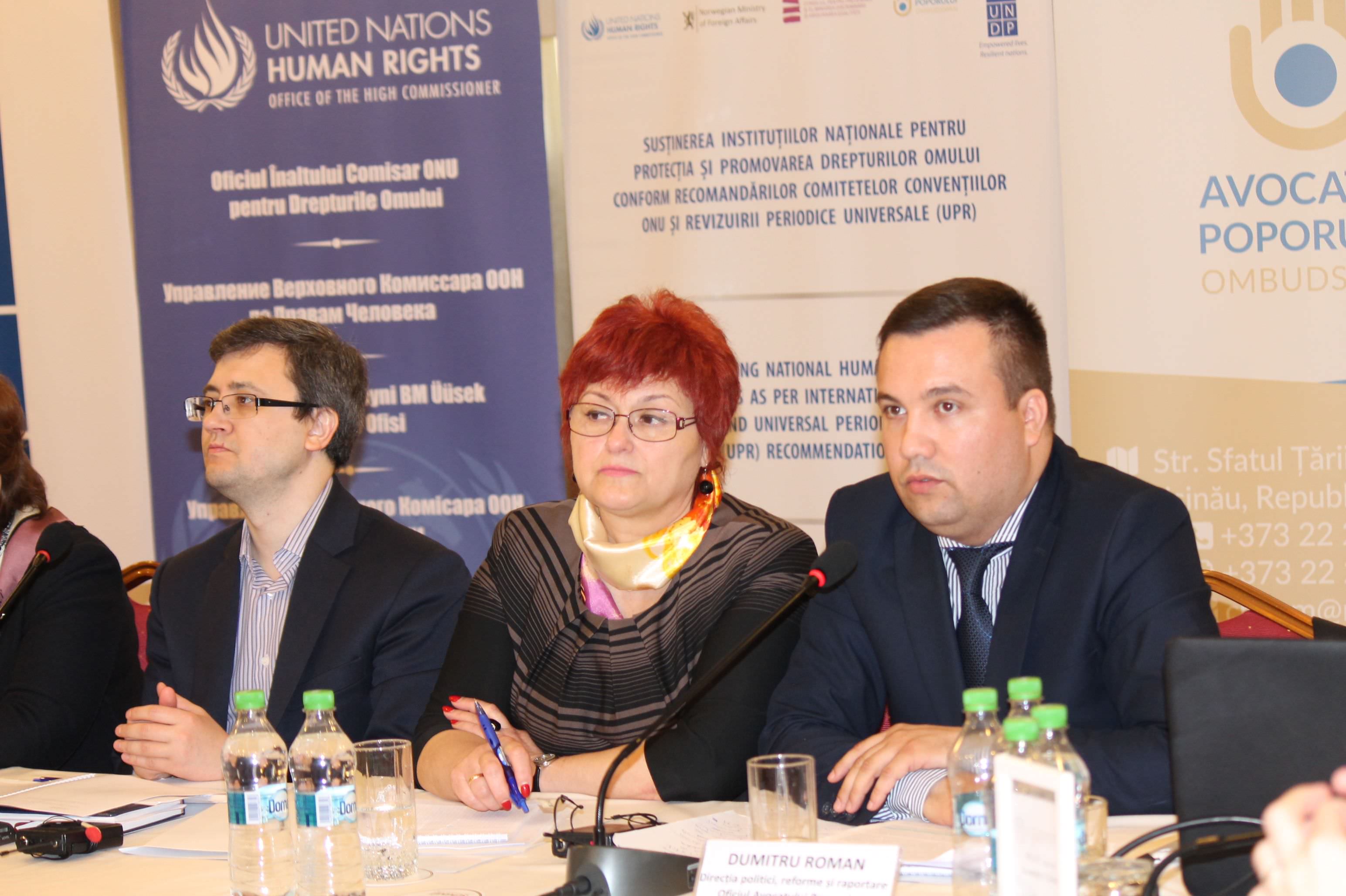
The Council visionabout the existing problems and the solutions were presented by the member of the Council on the Prevention and Elimination of Discrimination and Ensuring Equality, Andrei Brighidin. The deputy-head of the Policies, Reforms, and Reporting Division within the Ombudsperson’s Office, Dumitru Roman, informed the attendants about the findings and recommendations of the Ombudsperson’s institution.
The two NHRIs shared the same views on the issues ofgender equality and discrimination of persons with disabilities. Both reports mention the existing gaps, which hinder the efficient operation of the two institutions.
The Ombudsperson’s Office highlighted the issues related to the independence, transparency and efficiency of the judiciary, ensuring the minimal detention conditions, fighting and preventing domestic violence, and trafficking in human beings.
Apart from this, the UPR report of the Ombudsperson’s Office points out to the issues related to the promotion and safeguard of human rights in the Transnistrean region of Moldova as well as to a number of gaps in terms of child’s rights observance.
While some of the issues presented in the UPR report for the Ist cycle have been repeatedlymentioned in the current report due to the lack of progress or insignificant progress in this area, some other aspects, such as securing decent living conditions, observance of human rights when providing healthcare service, and supply of quality drinking water, have been addressed for the first time in the Ombudsperson’s UPR report.
A number of topics addressed in the report of the Ombudsperson’s Office are also tackled in the civil society’s reports. Thus, the Legal Resource Centre highlighted the issue of the independence of the judiciary, and the Centre for Assistance to Persons with Disabilities and other NGOs –the observance of the rights of persons with disabilities. In this context, it was established that the issue of accessibility for the persons with disabilities to public areas has remained an acute one for dozens of years, similarly to the access to justice, observance of the right to work of this category of people. A group of 18 NGOs, represented at the event by the Centre for Women’s Rights, addressed in their UPR report the domestic violence and the violence against women, and recommended as some of the solutions to improve Law No. 45, ratify the Istanbul Convention, and fight gender prejudice through actions aimed at raising citizens’ awareness about this phenomenon.
The issue of fighting torture, ill-treatment, and rehabilitation of the victims of torture was addressed in the report developed by RCTV „Memoria”in cooperation with Promo-LEX Association. The report indicates about the lack of significant progress in this area and recommends the state to observe the national standards in this area.
The representative of the Anti-Discrimination Coalition announced that 11 NGOs have prepared jointly three reports for the 2nd UPR cycle, where they call, among others, on the ratification by Moldova of the Optional Protocol No. 12 to the European Convention on Human Rights and improvement of Law No. 121 on Ensuring equality.
Nicoleta Hriplivii from Promo-LEX Association announced that the organisation she represents developed, with the support of other NGOs, seven reports, of which one about the human rights observance in the Transnistrean region and one on the observance of the right to election.
The findings and recommendations of the 2nd cycle of the UPR reports of OHCHR, UNICEF and UNHCR reflected the vision of the UN agencies of Moldova based on their activity in our country. The national coordinator of UN High Commissioner for Human Rights (OHCHR), Veaceslav Balan, mentioned that the report of OHCHR in Moldova presents issues related to the implementation of Moldova’s international commitments related to the human rights observance and the operation of the national institutions for human rights protection in Moldova. The UNICEF representative, Elena Laur,noted some improvements of the legal framework on juvenile justice, inclusive education, residential system, but said that the Government has still a lot to do to finalize the reforms started and to ensure proper social protection of children.
The head of the UNHCR Office in Moldova, has also stressed some achievements in the implementation of the recommendations of the 1st UPR cycle, particularly the fighting of statelessness; adoption of the Law on Integration of Foreigners; ensuring travel documents to the refugees. The UNHCR recommendations relate to the quality of establishing the status of refugees, integrating them in the local communities, the need for developing an action plan in the context of the current regional challenges and the migration crisis.
The representatives of public authorities attending the meeting came up with some remarks and comments about the issues discussed.
The representative of the Ministry of Education congratulated the organisers on the organisation of the event and thanked the participants for their recommendations, stressing that some of them coincide with some initiatives that are currently under discussion or preparation.
Stela Braniste from the Ministry of Justice stated that the institution she represents shares the concerns and worries expressed during the meeting and it has undertaken a strong commitment to develop a comprehensive and objective national report for UPR. She also expressed some reserves about a number of recommendations made and brought arguments to prove the efforts made by the authorities and the results achieved in the implementation of the reforms in the judiciary,bringing the legal framework on human rights in line with the international one,and actions to fight ill treatment and improvement of the detention conditions.
UPR is a unique mechanism of the Human Rights Council (HRC) aimed at improving the human rights situation on the ground in all UN Member States, by which HRC reminds the states about their responsibility to observe and implement all rights and fundamental freedoms of its citizens. The final goal of this mechanism is to improve the situation in the area of human rights in all countries to address human rights violations when they occur. The human rights situation in Moldova will be reviewed for the second time in November 2016. The first review of this kind took place in 2011.