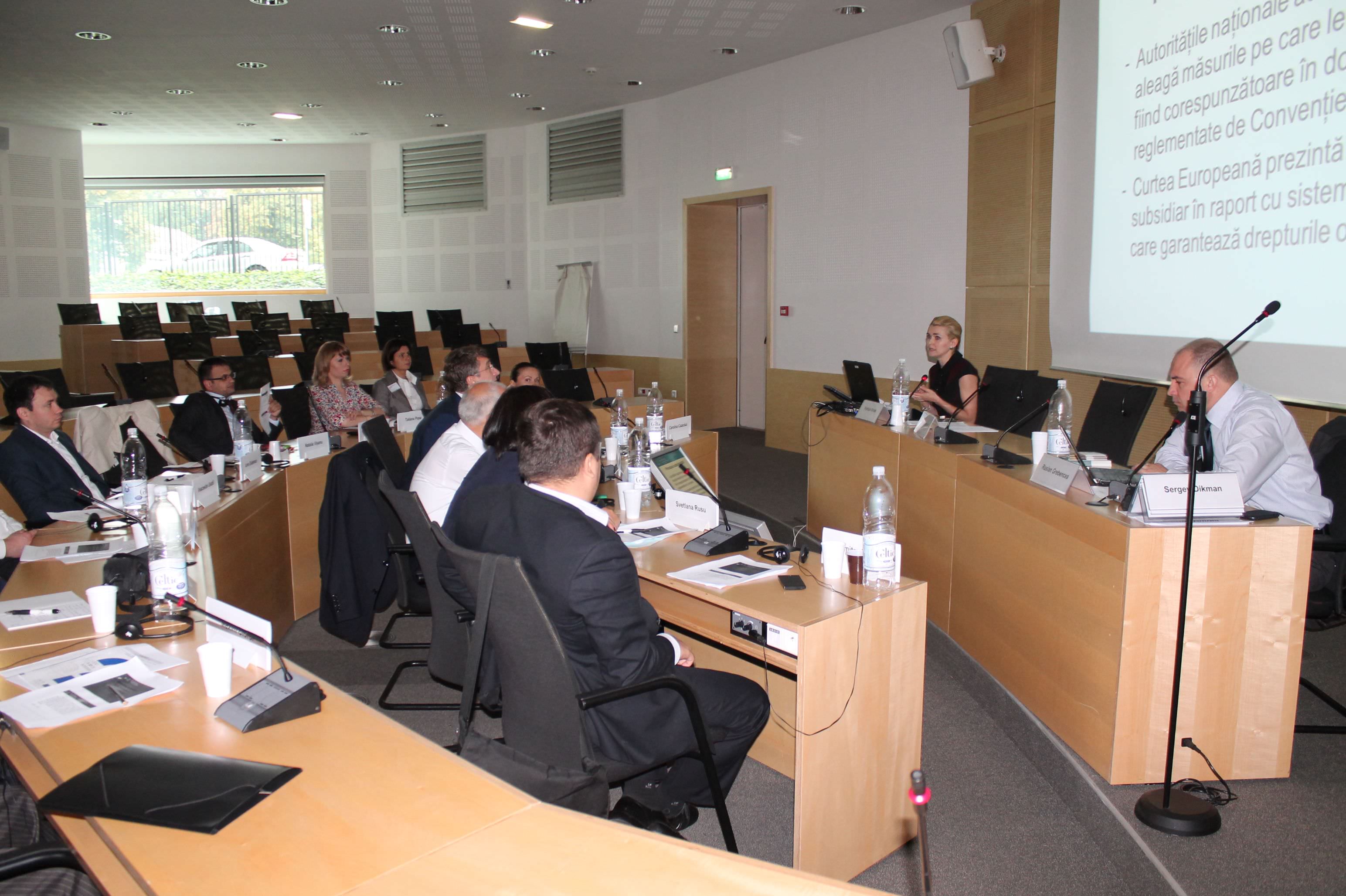
The role and mandate of the Commissioner for Human Rights of the Council of Europe, the European Court of Human Rights decisions execution, the rights of persons with disabilities were discussion topics at the third and last day of the visit of CHRM delegation in Strasbourg.
Mrs. Patricia Otvos, adviser of the European Commissioner for Human Rights spoke to CHRM employees about the role of Commissioner for Human Rights in his identification of structural problems and its emphasizing in the dialogue with civil society, the authorities of member states in order to identify solutions The European official also referred to the European Commissioner activity priorities, used tools. Employees of CHRM stated some points related to the establishment of collaboration between the National office of the ombudsman and the European Commissioner for Human Rights, his team, presented at the request of Patricia Otvos details about the reform of the national institution of human rights protection.
Within another meeting, Tatiana Cojocaru, an official of the Department for judgments of the European Court of Human Rights execution has given details about execution of ECHR decisions and any problems that may arise in this process.
Were tackled aspects of supervision procedure of Court judgments execution and types of supervision, the duties lined out from the ECHR judgments and the possibility of reopening the national procedures. Tatiana Cojocaru provided recent statistical data related to the execution of ECHR judgments and highlighted the main groups of causes.
Another European expert - at the Department Antidiscrimination and Social Cohesion, Alexander Preobrazhenskiy spoke about the activity of the Committee of Social Rights, duties and tasks, methods of monitoring the implementation of the European Convention for protection of persons with disabilities and the European Social Charter. In this context, CoE official noted that Republic of Moldova has signed and ratified the European Convention for the protection of persons with disabilities.
Alexandru Preobrazhenskiy mentioned the existence of collaborative relationships on this dimension between the Committee of Ministers and the Moldovan authorities. In this instance was invoked the example of a training which will take place in the frame organization of Council of Europe at Vadul lui Vodă in mid September of 2014.
The CHRM Director Anatolie Munteanu revealed that the protection of rights of persons with disabilities and social protection as a whole is a priority of the National ombudsman office activity, mentioning that the institution does not have sufficient possibilities for effective monitoring of the Convention implementation. This is done only in certain segments, recalling the context of recent monitoring experience of access to public institutions for people with physical disabilities. The Ombudsman announced the CHRM interest in establishing of direct contact with CoE subdivision of Committee of Ministers as well as the realization of future joint actions, initiative supported by Alexander Preobrazhenskiy.
On the final stage the documentation visit, Sergey Dikman expert in Implementation Support of Human Rights on the National Level Unit, has expressed the hope that this visit to Strasbourg was useful and interesting for CHRM employees. Sergey Dikman also revealed that the project in the framework of which was organized this visit will last until May 2015 which provides opportunities for new collaborations.
The CHRM Director Anatolie Munteanu thanked the organizers for the documentation visit outlining that drafted agenda, proposed topics for discussion have led to some valuable practical information, exceedingly useful in human rights protection activities of the National Office employees. According to CHRM Director, has been reached the purpose of direct contacts establishment with officials from the Council of Europe divisions, pointed out some collaborative actions for the future.
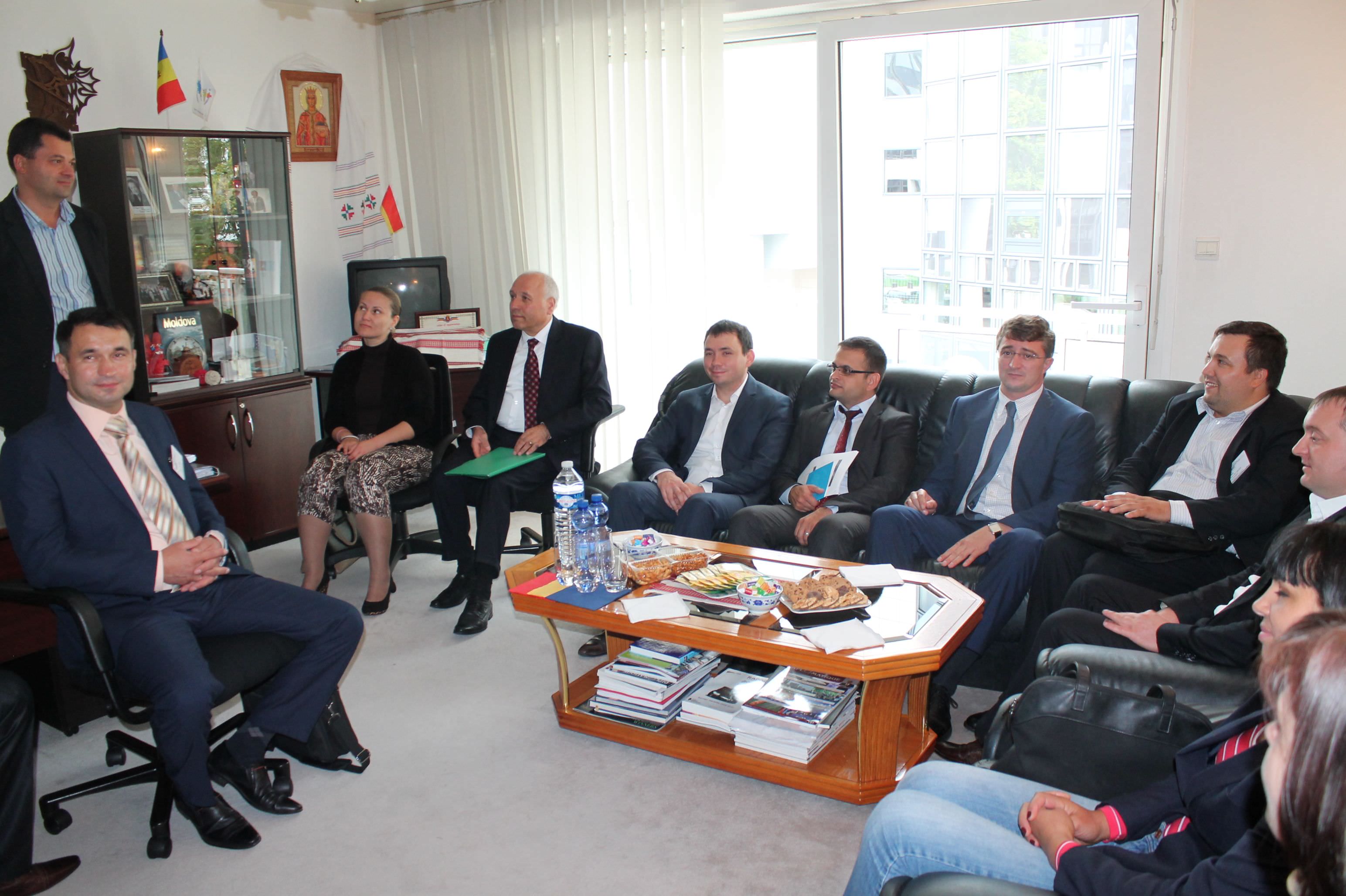
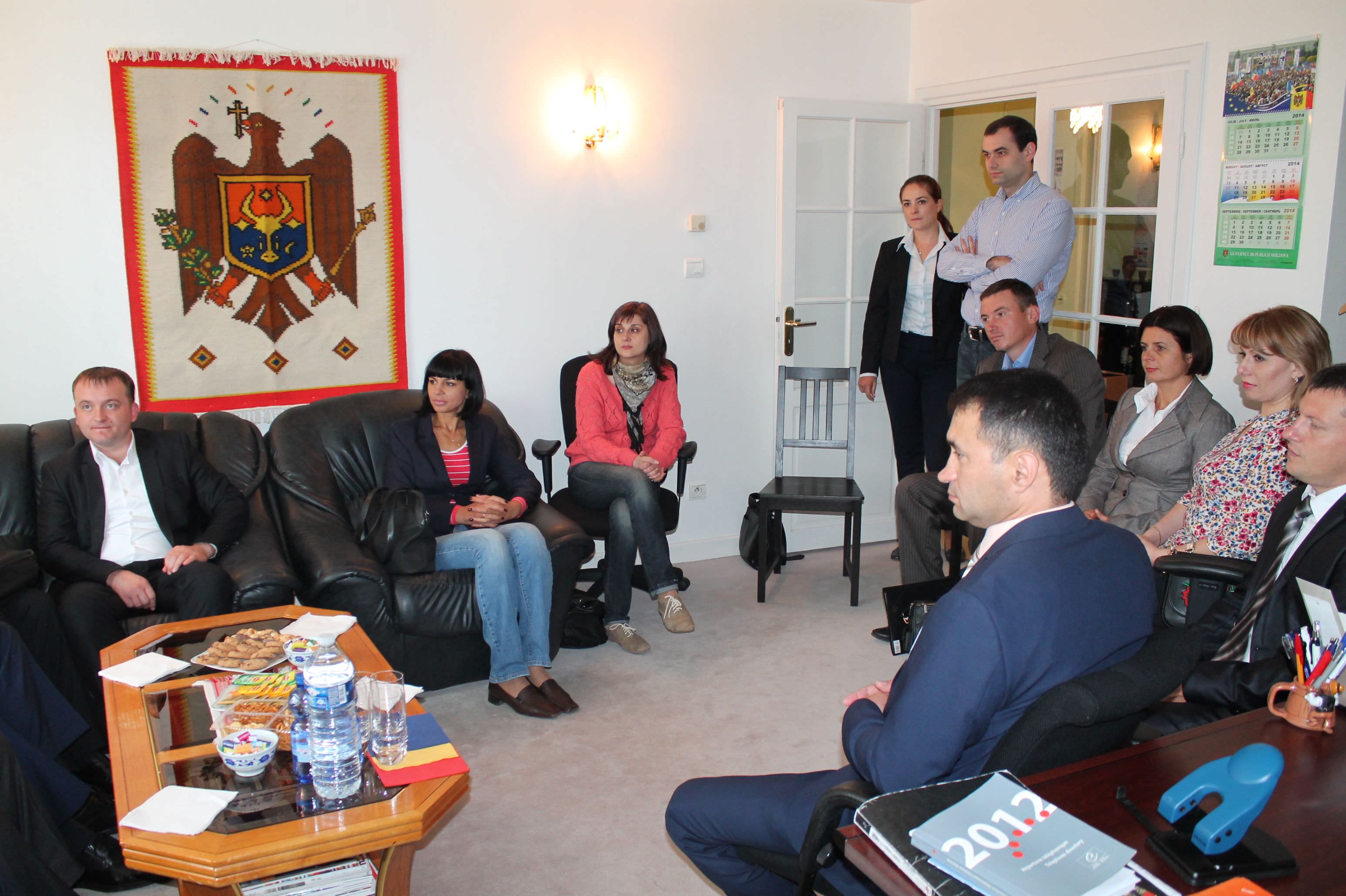
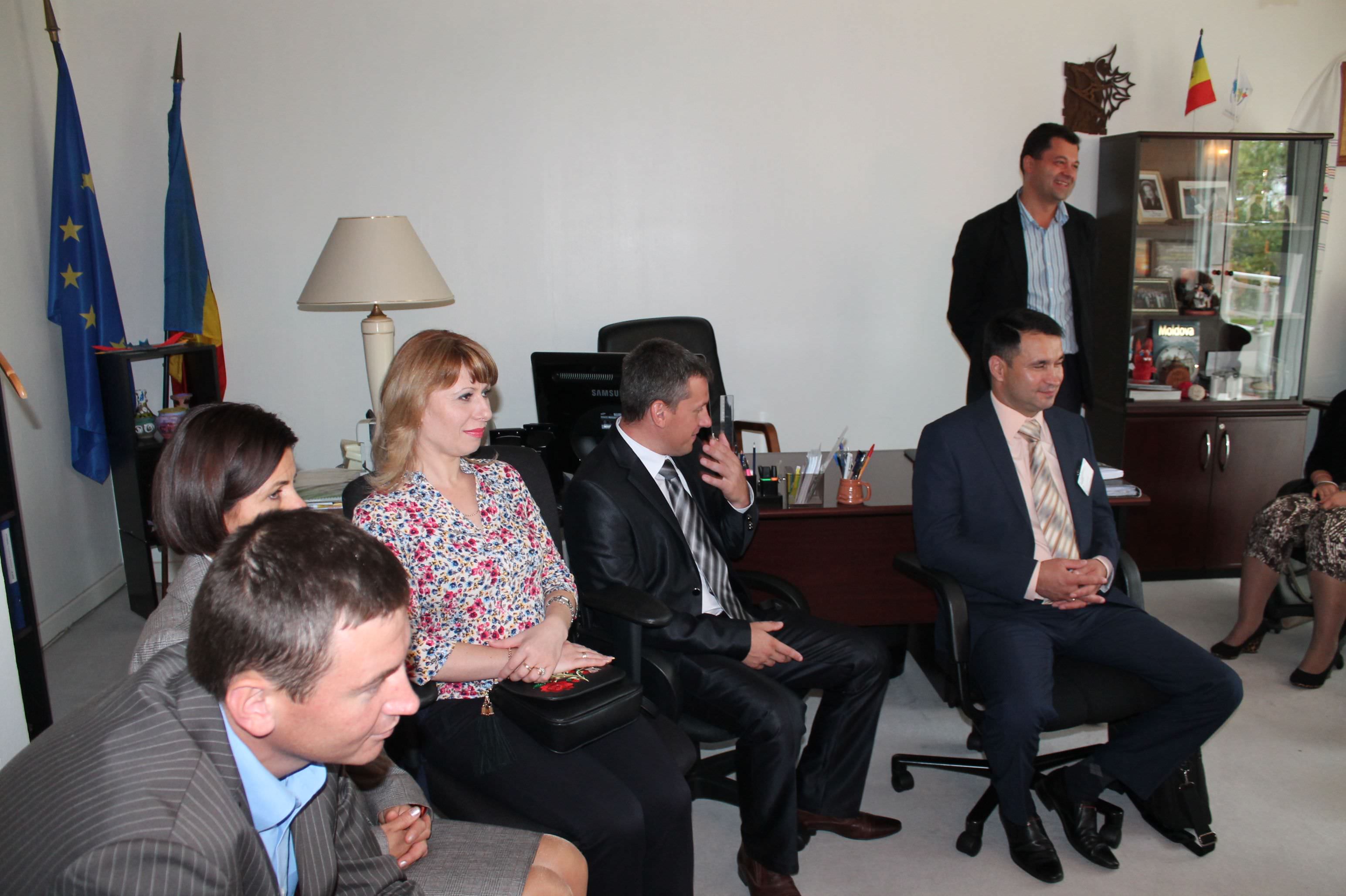
On the last day of the visit to CHRM employees met with diplomats of the Republic of Moldova Mission in Strasbourg at its headquarters.
The director of CHRM informed the representatives of the diplomatic mission about the documentation visit, highly appreciating its results. Ombudsman expressed confidence that Moldovan diplomats in Strasbourg will support the efforts of the People’s Advocate Institution in the intention to establish a close and effective co-operation with the Council of Europe structures in order to improve the situation regarding the compliance of rights and fundamental freedoms in Republic of Moldova.