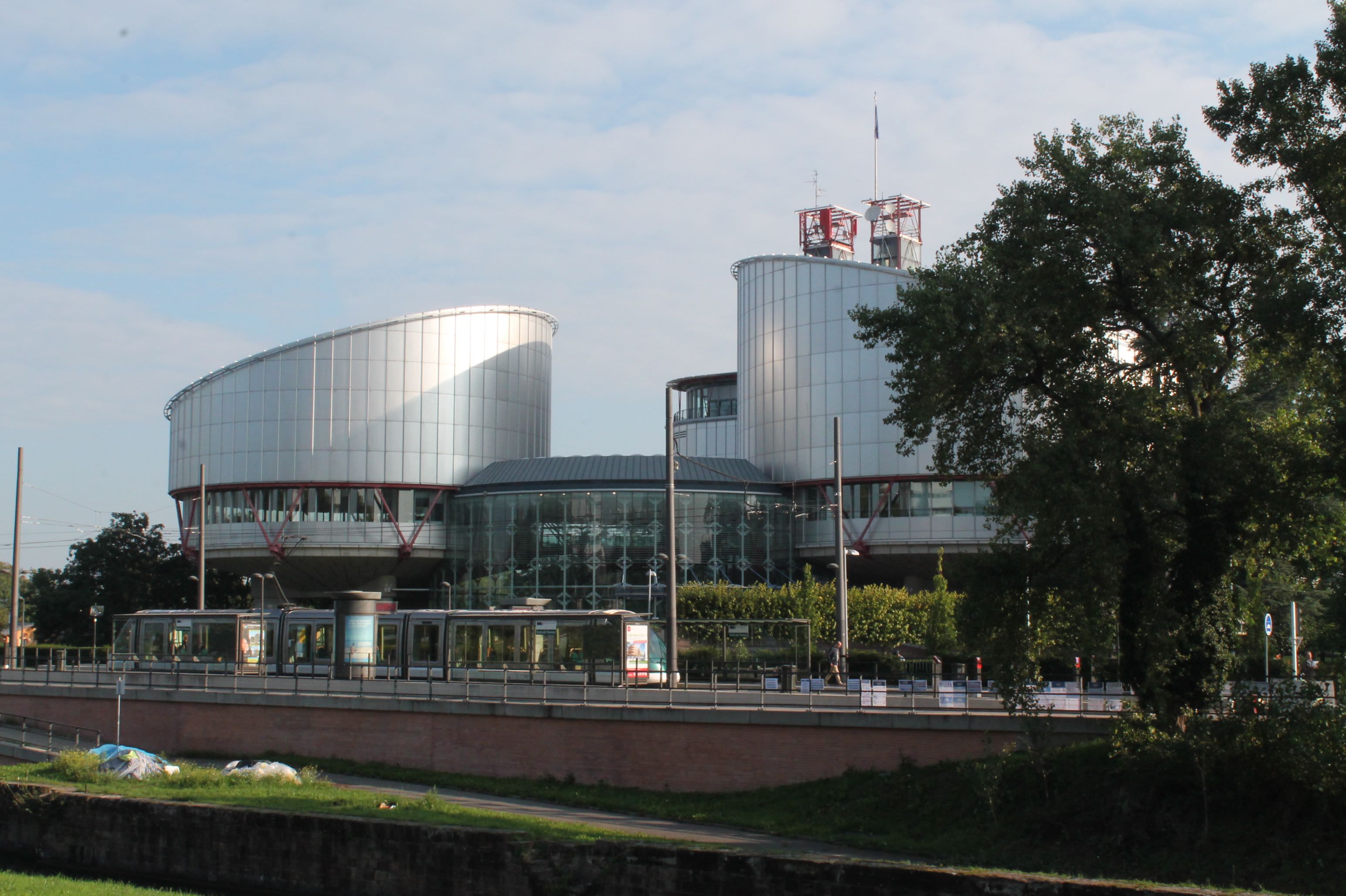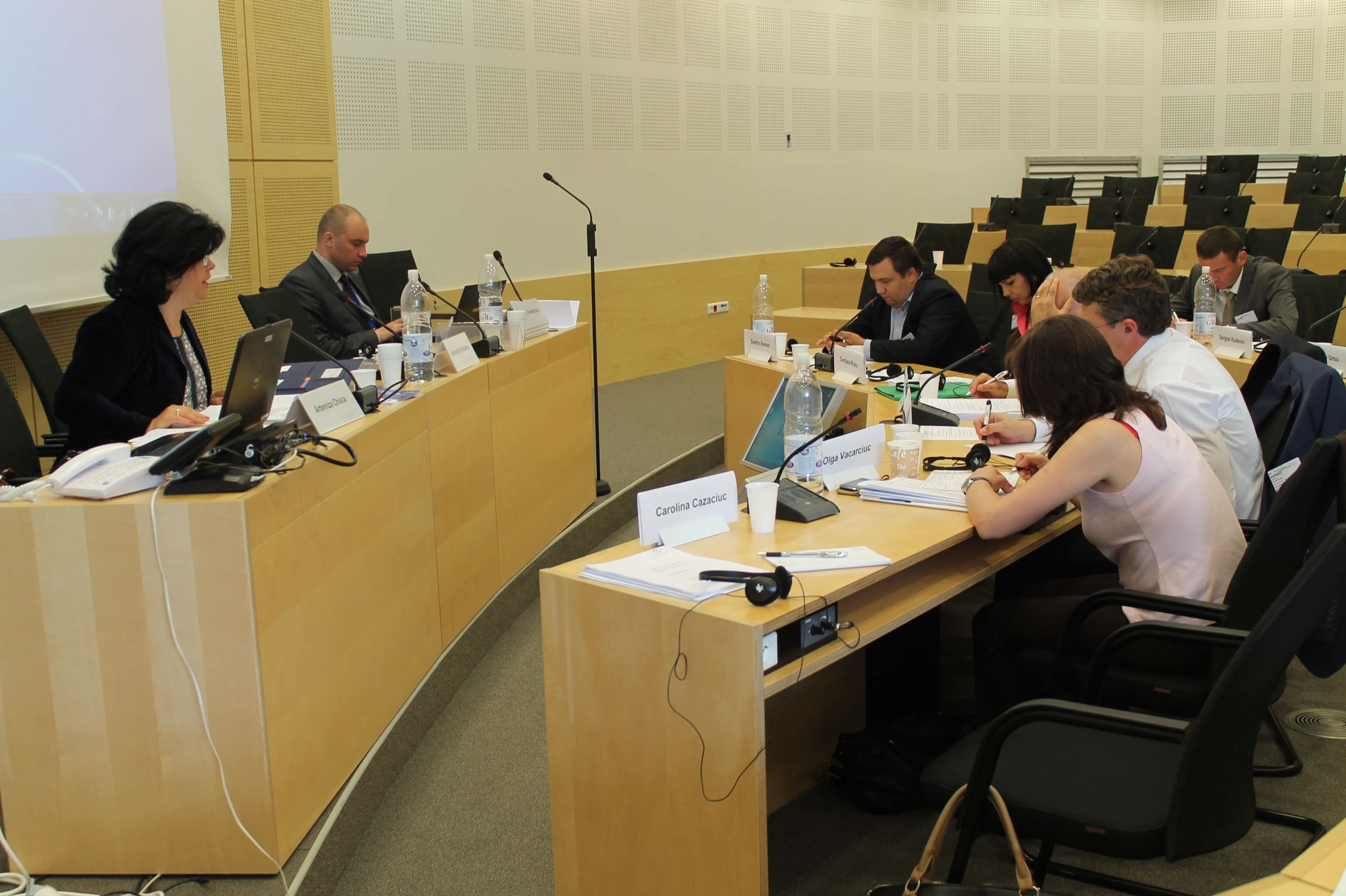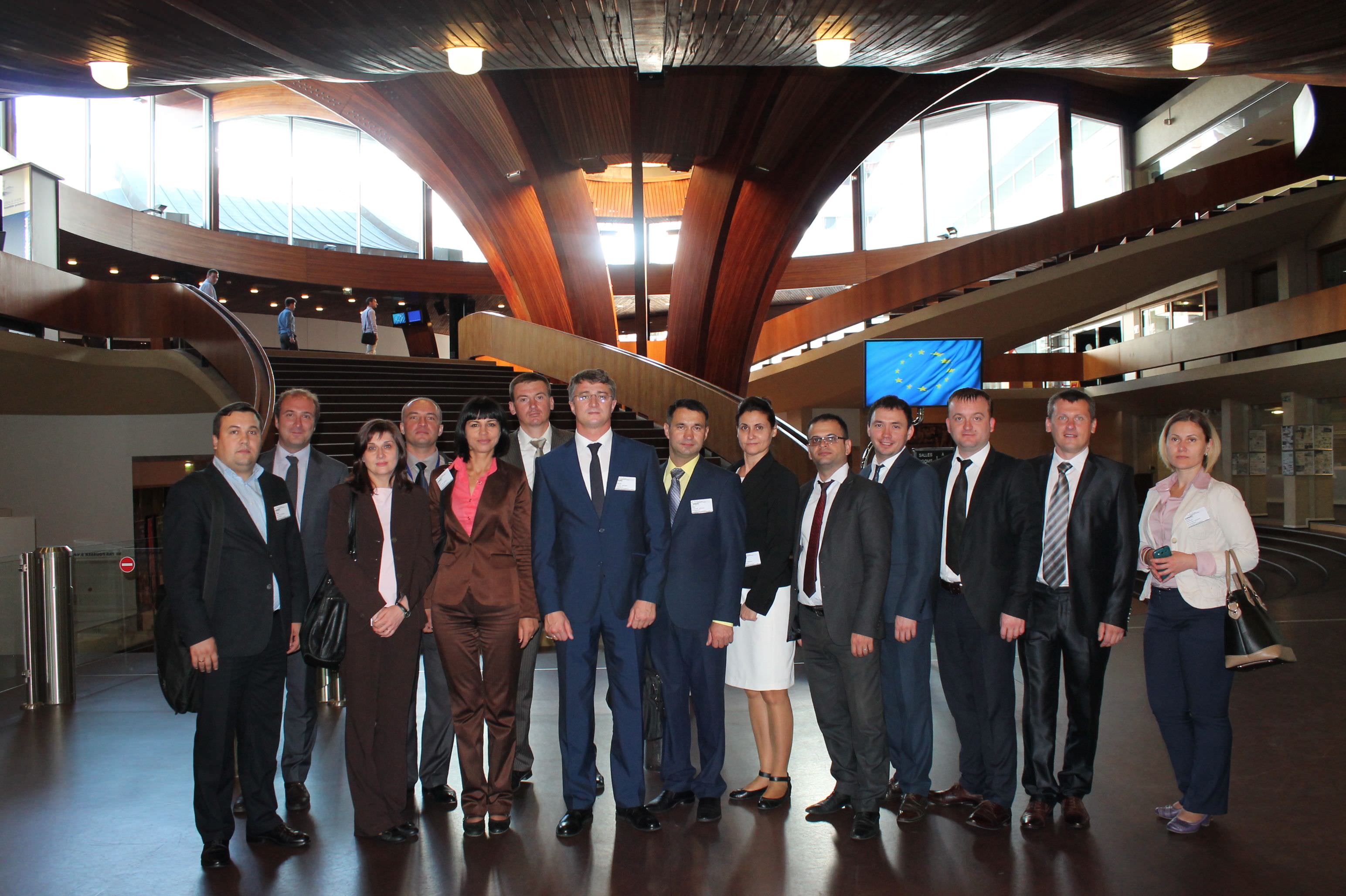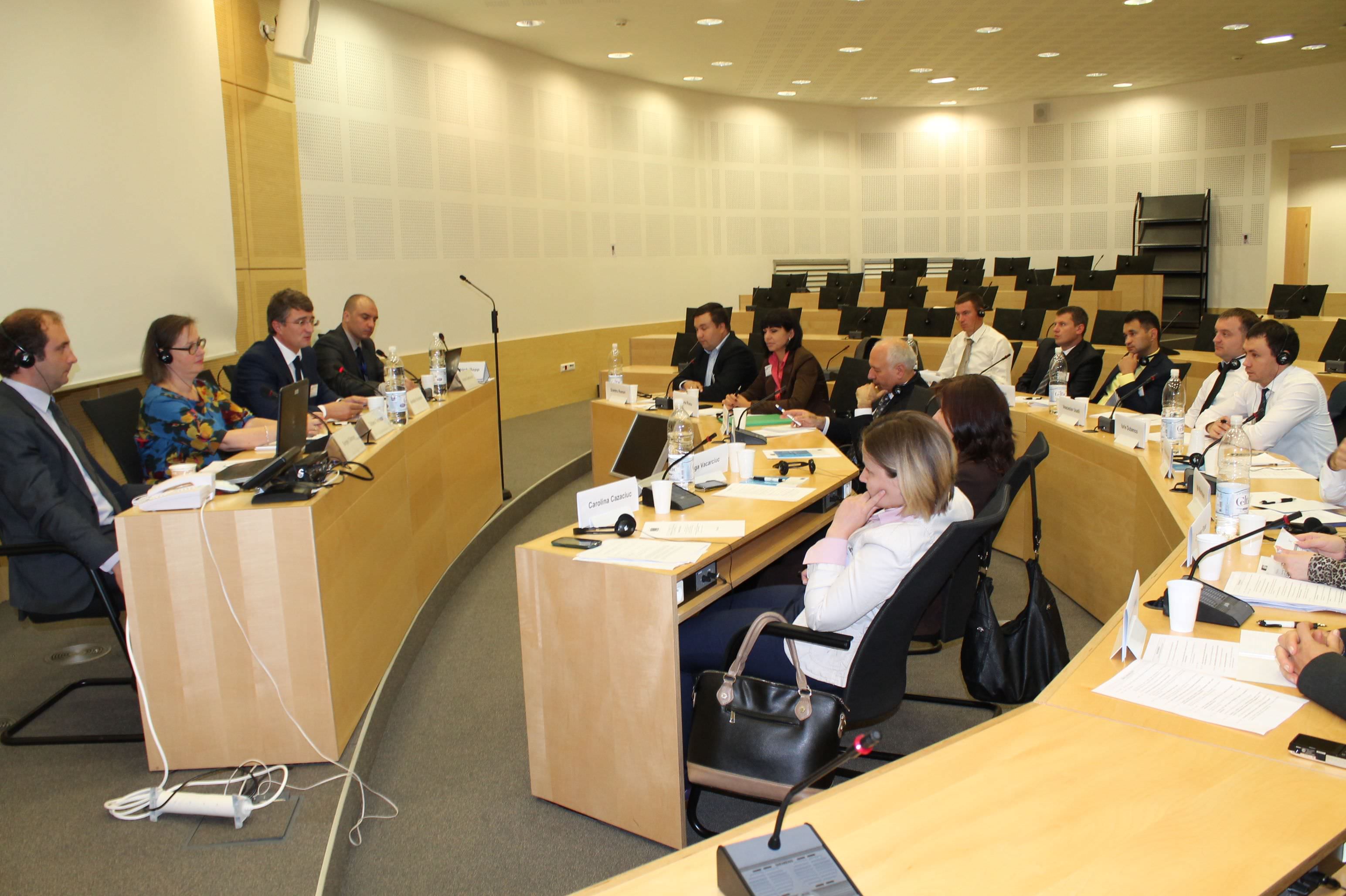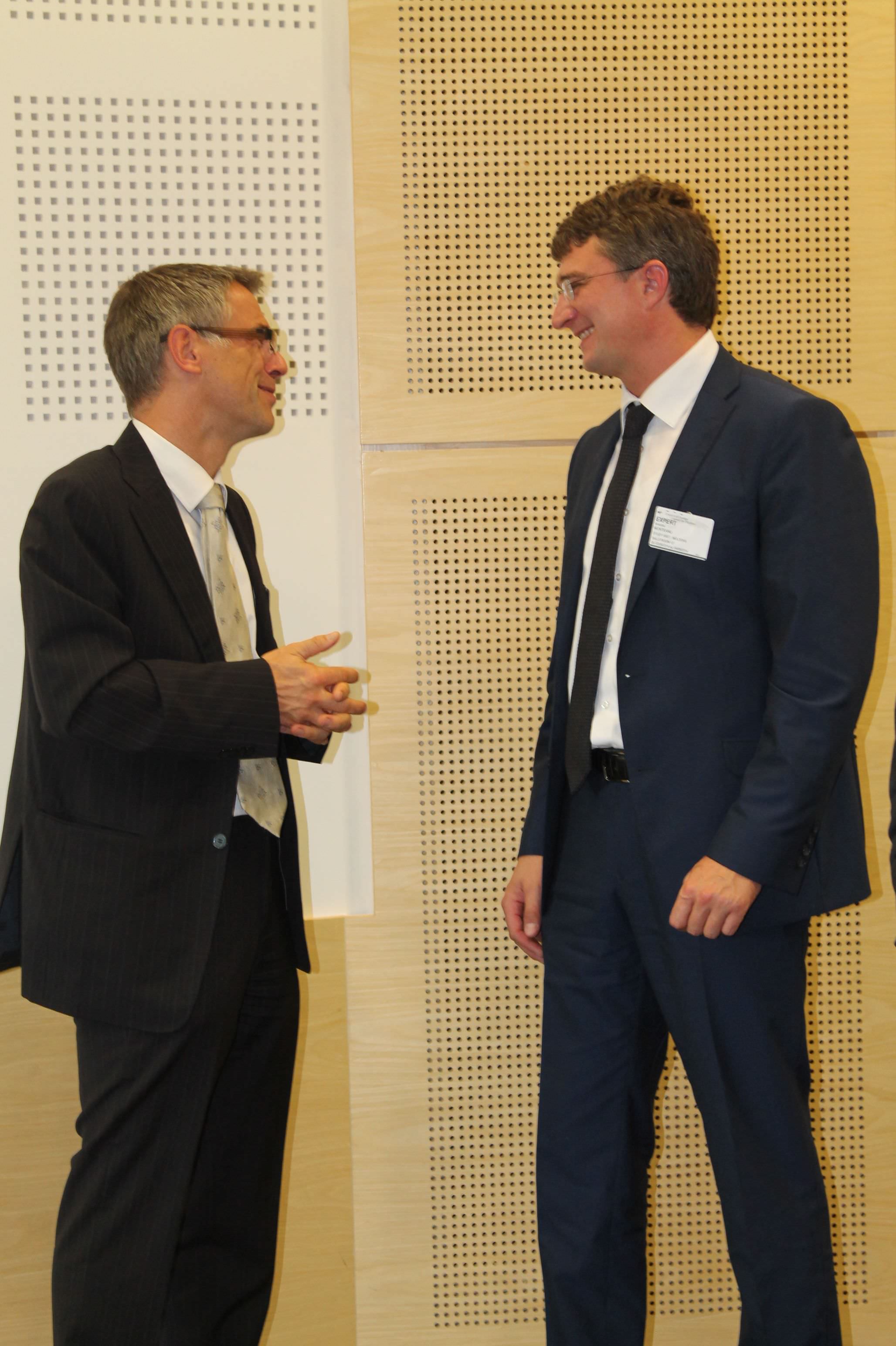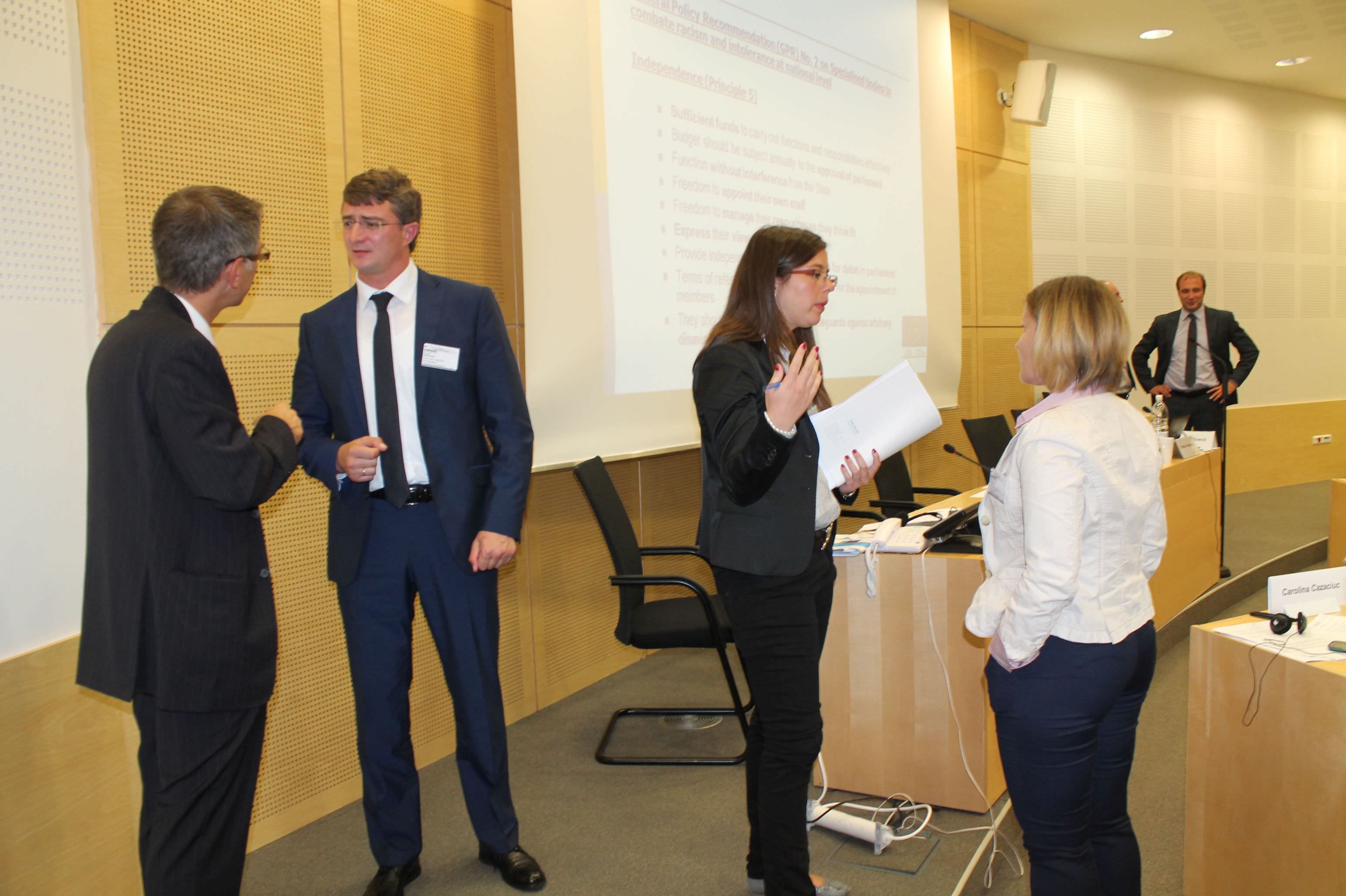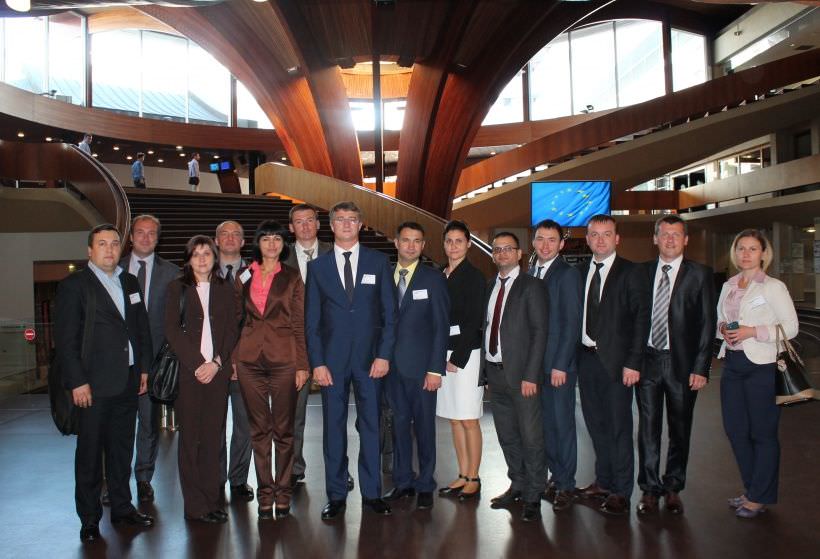
On September 2, 2014 in Strasbourg has started the study visit of ombudsmen Anatolie Munteanu and Tudor Lazăr, with a group of 13 employees of the Center for Human Rights of Moldova within the Council of Europe project: «Support for the coherent implementation at national level of the European Convention for Human Rights in the Republic of Moldova.».
The documentation visit is organized by the General Directorate of Human Rights and Rule of Law, Directorate for Human Right, Department of Policy for Human Rights and Development, Support of Human Rights at the National Level Unit of the Council of Europe.
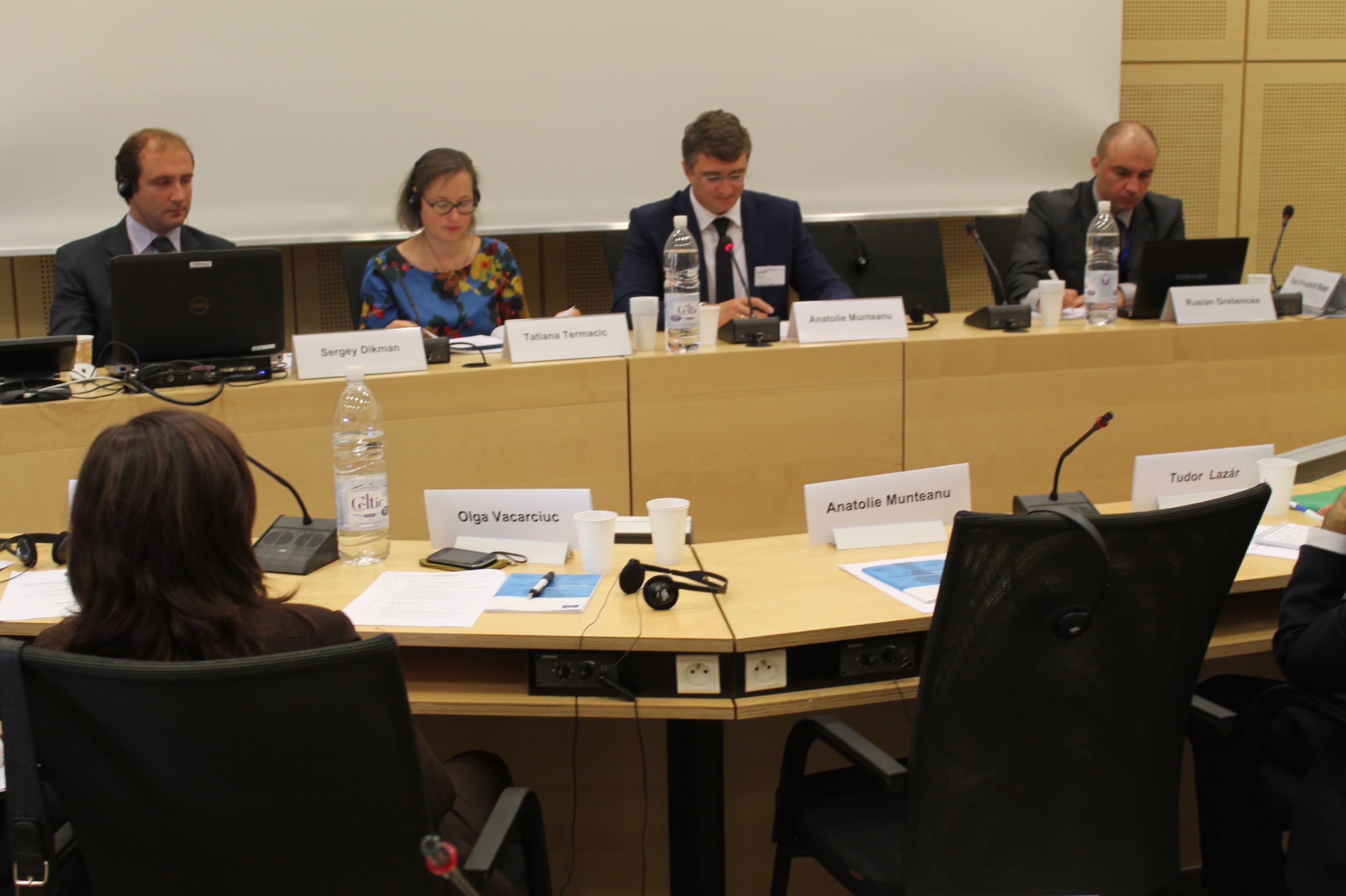
The ombudsmen and CHRM officials visit to the Council of Europe fit within the context of CoE efforts on implementation of European standards in the field of human rights in the member states, mentioned on the meeting with the representatives of the national Office of human rights protection from Moldova the chief of Support Unit of Human Rights Implementation on National Level, Tatiana Termacic. The European official also revealed that the realized by CoE project is intended for prosecutors and judge as well as for Ombudsman institution. That's because effective examination of petitioners’ complaints, reinstatement of citizens’ rights, other effective activities of human rights protection will allow solving of several cases in national justice without citizens need to resort to the ECHR. Tatiana Termacic expressed the hope that the study visit will contribute to the development of cooperation between the CoE and CHRM, will provide the opportunity for the identification of new directions of cooperation.
The CHRM director Anatolie Munteanu, stressed that the study visit fit within the context of promotion actions and implementation of European values in the field of human rights in Republic of Moldova.The ombudsman shared the opinion of Tatiana Termacic on the need to resolve the cases regarding the human rights violations on national level, emphasizing that for CHRM effective activity it is a need for a team of well-trained employees. The current visit to Strasbourg offers to officials of Moldova’s Ombudsman Office a possibility to get informed from the first source regarding the principles and methods of activity, as well as the experience of specialized structures of CoE in the field of Human Rights. Mr. Anatolie Munteanu showed confidence that the visit will be very useful, expressed gratitude to the organizers for their involvement in this project of a group so representative from the Institution of human rights protection from Moldova.
The first day program to Strasbourg of CHRM employees included a meeting with representatives of the European Social Charter and the European Code of Social Security Departments, Shila Hirschinger and Karl-Friedrich Bopp, within the CHRM staff was informed about the basic documents of the Council of Europe in the field of social justice and social security, about the activity of the European Committee for Social Rights and the actions for monitoring of Social Charter implementation. The speakers referred to the findings and recommendations regarding the situation in Republic of Moldova sphere of social rights observance. It was noted that the Moldovan authorities had the courage to ratify the European Social Charter but not ensured its completely compliance. Certain actions were taken only for social protection of Moldovan migrants, for this purpose being signed cooperation agreements with some countries. However, the made efforts are not sufficient to create a social security system according to CoE standards. The European officials called CHRM representatives to increase the monitoring activity of social rights observance and launch recommendations aimed to improve the situation. In this context Anatolie Munteanu, announced interest in taking over of positive practices of Ombudsman institutions from other countries in this regard and Tudor Lazăr said that CHRM recommended to the Government to ratify the Article 12 of Social Charter.
Europe-wide eteps to combat trafficking in human beings was the subject of a meeting with the representative of the Secretariat of the Council of Europe Convention on Action against Trafficking in Human Beings (GRETA), Gerald Dunn. CoE expert noted that our country has ratified among first member states of the CoE Convention on the protection of victims of human trafficking, as well as positive developments in recent years of its implementation. Gerald Dunn called for the intensification of combat on trafficking in human beings, including by organizing awareness campaigns on the phenomenon. CoE official said that human trafficking is a serious human rights violation.
Within another meeting, the representative of the Secretariat of the European Commission against Racism and Intolerance, Wolfram Bechtel, discussed with the employees of CHRM aspects of the role and mandate of ECRI, situation in the field in the Republic of Moldova. It was estimated that in 2012 the Moldovan Parliament adopted the Law on ensuring equality, afterwards being created the Antidiscrimination council. However, the CoE encourages the Moldovan authorities to ratify the Protocol No. 12 of the ECHR and CHRM employees were encouraged to apply more active available levers to assist people who have suffered from discriminatory actions, hate crimes and to engage more frequently in investigating cases of discrimination. In this context, the ombudsman Tudor Lazar referred to the actions performed by CHRM on the segment of combating discrimination and hate crimes: organizing meetings attended by prosecutors and judges, NGOs to discuss opportunities to improve the legal framework regarding hate crimes. As for the Protocol No. 12, the ombudsman revealed that CHRM recommended repeatedly about the ratification of this important instrument. CHRM actively cooperates with NGOs working in this field as well as the Council of antidiscrimination.
During the meeting with Wolfram Bechtel was approached the question of institutional reform of CHRM, the European official requesting the details regarding the progress of this process. Director of CHRM noted that the Law on People’s Advocate, adopted in April on this year, contains some gaps that raise doubts regarding its compliance to international standards in this field. Anatolie Munteanu noted that one of provisions of the new law shortly after its adoption was challenged in the Constitutional Court.
According to CHRM Director, the provisions of Law as concerns the statute of the ombudsman, the degree and mode of remuneration of employees needs to be improved, which would provide future independence of the People’s Advocate Office. Mr. Anatolie Munteanu, expressed its willingness to present to Mr. Bechtel more information on this and other topics within the CoE official visit to Chisinau which will take place at the end of September. Wolfam Bechtel, accepted with pleasure the proposal of CHRM Director to have a meeting in Chişinău during his soon visit to Republic of Moldova. CoE high official has also stressed in this context that the Council of Europe's position is firm: The Institution of Ombudsman must be independent one, it must have human and financial resources necessary for an efficient activity.
Also Artemiza Chişcă from the Secretariat of the Venice Commission informed the employees of CHRM's about the mandate and working methods of the European Commission for Democracy through Law, and the representative of CCNM, Charlotte Altenhoner-Dion, referred to the monitoring mechanism of the Framework Convention for the Protection of National Minorities.
The agenda of the first day visit to Strasbourg also included a meeting with the representative of the European Committee for the Prevention of Torture and Ill-treatment (CPT), Cristian Loda, who spoke about the mandate and methods of this structure activity. Anatolie Munteanu in this context revealed that during 2008-2014, CHRM employees conducted within the National Preventive Mechanism of Torture Prevention approximately 700 visits to places of detention, coming up with numerous recommendations for improving the state of things in many institutions where persons are detained. Anatolie Munteanu cited example of CHRM recommendations on closing of prison no. 13 in Chişinau, which does not meet national and international standards of detention, reason why inhuman and degrading conditions within it were subject to ECHR convictions of our country.
The CHRM director has also requested the assistance of CoE in expertise of the Law on People’s Advocate, a chapter of which is related to the national mechanism for torture prevention which will be created in the new formula, after the appointment of the People’s Advocate. The CHRM employees were more interested on CPT methodology in conducting visitors to the places of detention.