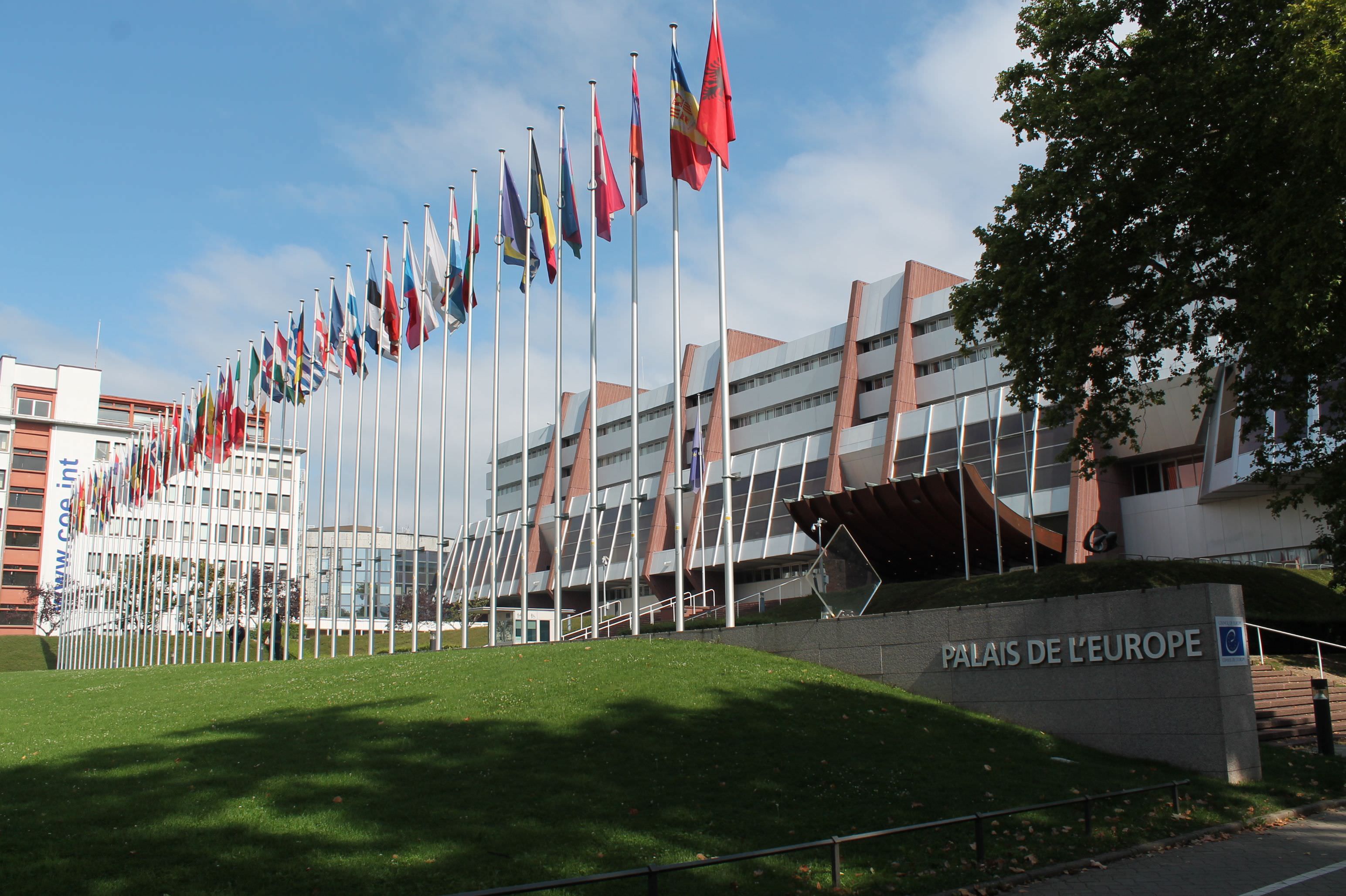
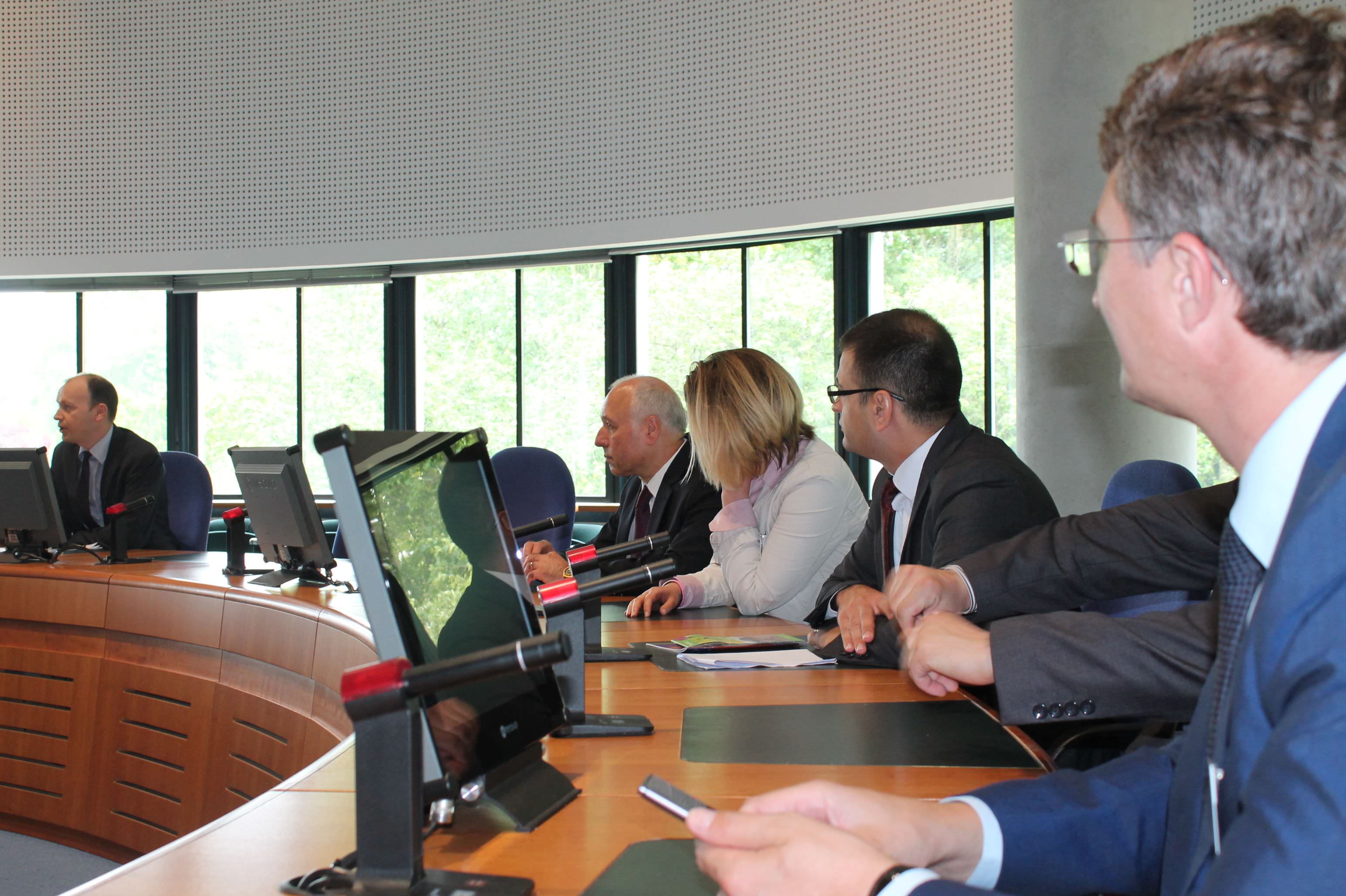
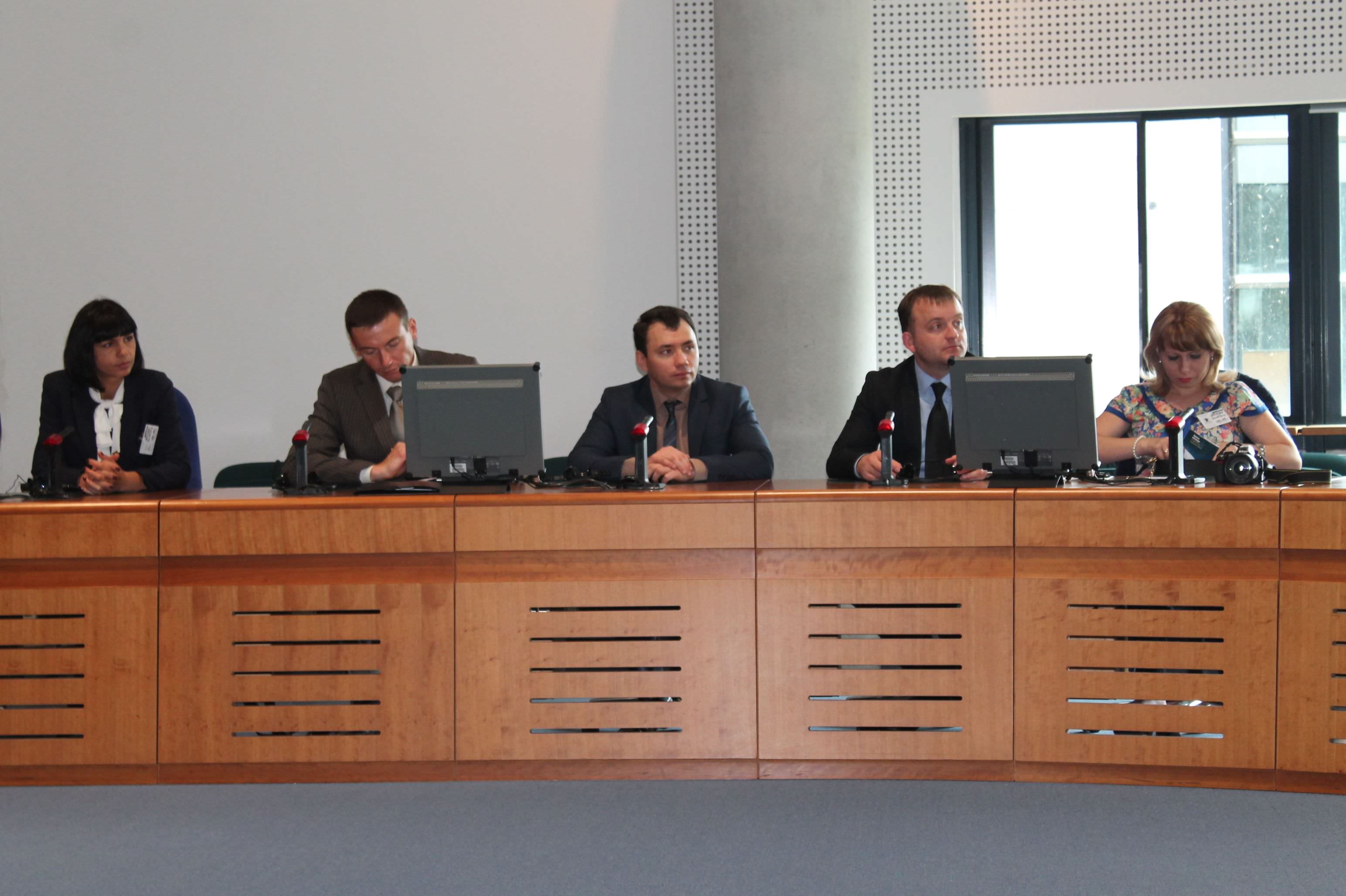
In framework of visit to Strasbourg the CHRM servants were present at the public hearings in the Grand Chamber of the ECHR in the case Khoroshenko v. Russia (http://www.echr.coe.int/Pages/home.aspx?p=hearings&w=4141804_03092014&la...).
Applicant's complaints - detained for life were related to his claim of the right for long term meetings with relatives and friends, which Russian legislation does not provide for the first 10 years of detention in the cases of convicts who have committed very serious crimes. Khoroshenko considers that these restrictions violate his right to privacy and family life, under Article 8 of the European Convention on Human Rights. He also argues that limitations regarding long visits have a discriminatory effect on him, claimed his injured right with reference to art. 14 of the ECHR. The applicant and his defenders assert that the restrictions of the criminal law in the Russian Federation are not proportionate to the legitimate aims of punishment, not being respected the balance between public and private interests. During today's hearing, the panel of 17 judges of the Grand Chamber of the ECHR heard the arguments of the Government Agent and the applicant defenders, following deliberate on the arguments presented by them.
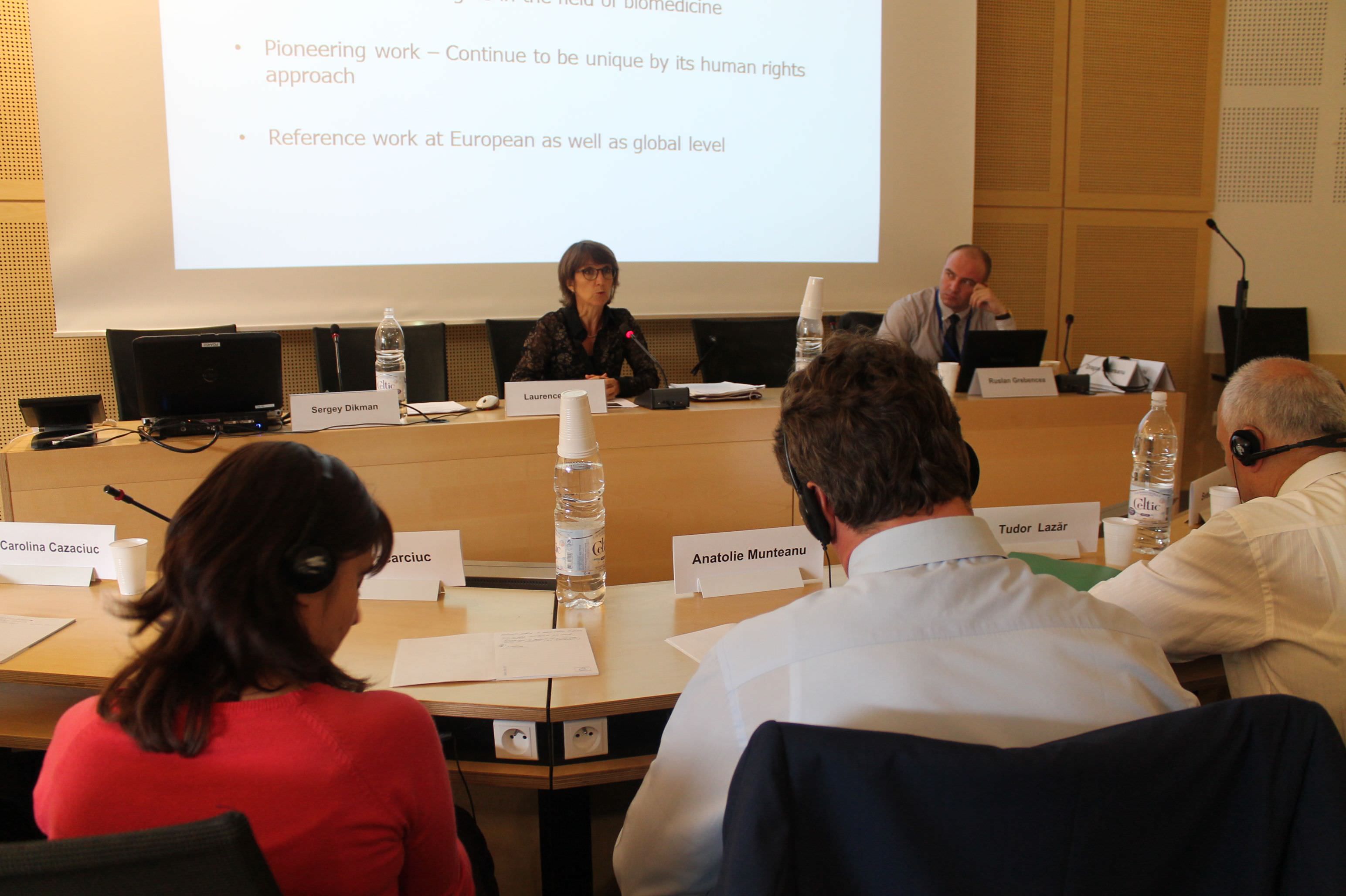
The employees the CHRM met with the representative of the Secretariat of the Committee for Bioethics, Laurence Lwoff, who presented more details about the monitoring activity in implementation of the Convention on Human Rights and Biomedicine, the activity of the Intergovernmental Committee for Bioethics.
CoE expert stressed that the Republic of Moldova signed in 2002 and ratified among the first countries the mentioned Convention when it was opened for ratification. Our state has ratified all the additional protocols to the Convention on Human Rights and Biomedicine, called the Oviedo Convention.
Laurence Lwoffalso noted the good relations of cooperation between Bioethics Committee and experts in the field in our country, in joint framework being conducted projects in the sphere of transplantology, research ethics and protection of participants in medicine research.
At the CoE official request, the CHRM Director Anatolie Munteanu, referred to relevant topics in the field that have been given the attention at the Ombudsman’s Office. The Parliamentary Advocate spoke about problems related to the failure of condition for obtaining patient consent for medical intervention, which happens so because of ignorance of patients as well as health professionals. The Ombudsman has also invoked a case in which doctors did not know or did not want to wear the possibility of obtaining the consent of a legal representative for carrying out of urgency surgery to a child, whose parents, for religious reasons, did not accepted it.
The director of CHRM also revealed that monitoring compliance with the Oviedo Convention is one of the objectives set at the beginning of his term as parliamentary advocate priority which nevertheless he regrets that it has not been realized in a proper extent.
However, there is the need and desire to focus the activity of the Ombudsman Office in this sphere of human rights, Anatolie Munteanu expressing his interest in establishing of a close cooperation in future between the Office of the People’s advocate and the Committee for Bioethics.
With much interest the CHRM employees have heard the information presented at another meeting by a jurist from the Registry of the European Court of Human Rights, Dragos Cucereanu about the ECHR activity as a whole, as well the procedure for submitting complaints, a review of cases.
The CHRM employees have stated many points about the possibility of submitting by a representative of Ombudsman institution of a complaint to the ECHR, after exhausting of all domestic remedies, in the interest of a petitioner, whose rights were previously protected by the National office for the protection of human rights in a court instance. Dragoş Cucereanu also was asked to define how CHRM could collaborate with the ECHR in order to highlight of some tendencies, systemic human rights problems that can be eliminated through joint efforts. The jurist from the ECHR said that for an effective examination of Moldovan citizens complaints the European Court officials are in need of current information about the real state of things on the situation regarding human rights compliance in our country. That is why the CHRM reports and studies are very valuable for the documentation in the presses of proposals formulation on the edge of complaints submitted to ECHR. In this context, Dragoş Cucereanu noted that at the examination of torture cases were used data from CHRM reports from compartment of findings from the edge of visits within the National Mechanism for Torture Prevention. He stressed that CHRM can be more effective in this respect than the European Committee for the Prevention of Torture because it has the opportunity to develop and present accurate and conclusive operative in formations about the status of things of persons that are in detention places.The CHRM Reports are a credible source of information for ECHR judges that the most important contribution of the Ombudsman Office would be the operative elaboration of reports, case studies that would clarify the actual situation regarding respect for human rights in the Republic of Moldova, said Dragoş Cucereanu. Form the other point of view, ECHR servant mentionedthat in recent years there has been a downward trend of the number of complaints relating to torture and ill-treatment.At the same time appeared a new category of complaints that refers to domestic violence.The Court has already ruled on several similar cases to signal the authorities about a system problem.With special attention are examined the complaints received from the Transnistrian region. One such case is to be heard by the Grand Court in February of 2015. Within the another meeting with servants other CHRM Victor Brăgoi, a jurist at the ECHR Registry, provided more details regarding the criteria that must be met for the admissibility of an application to ECHR.
At another meeting, the CHR employees were informed about the developing a new project of the Council of Europe, for strengthening the protection system of human rights in the Republic of Moldova and implicitly strengthening the national ombudsman institution in our country. This project will be funded under the Program of the Kingdom of Denmark for the Republic of Moldova conducted since 2015. The start of the nominated project, however, is conditioned by the fact of positive development in implementation of the Law on People’s Advocate, which was adopted at the beginning of this year.