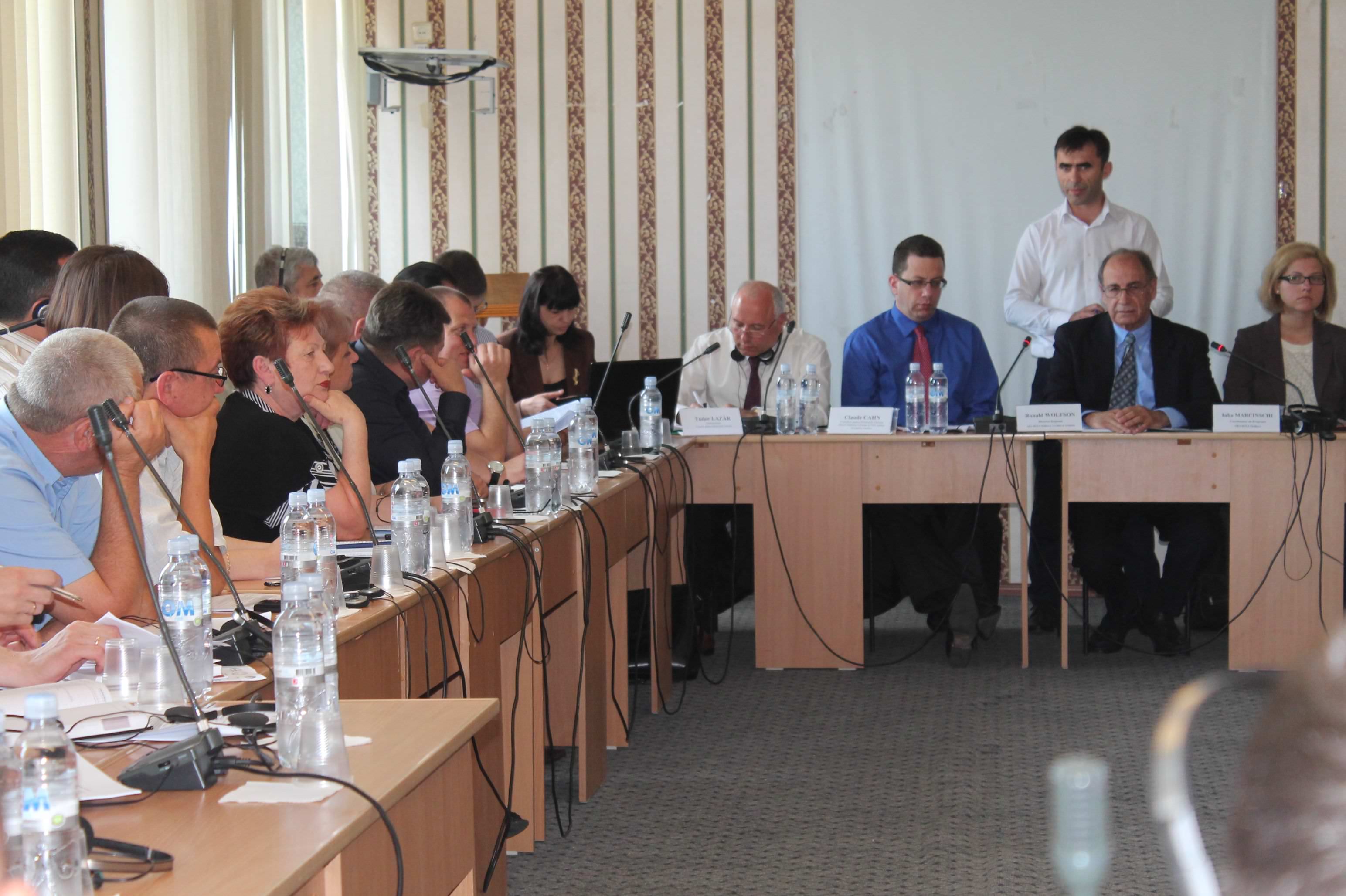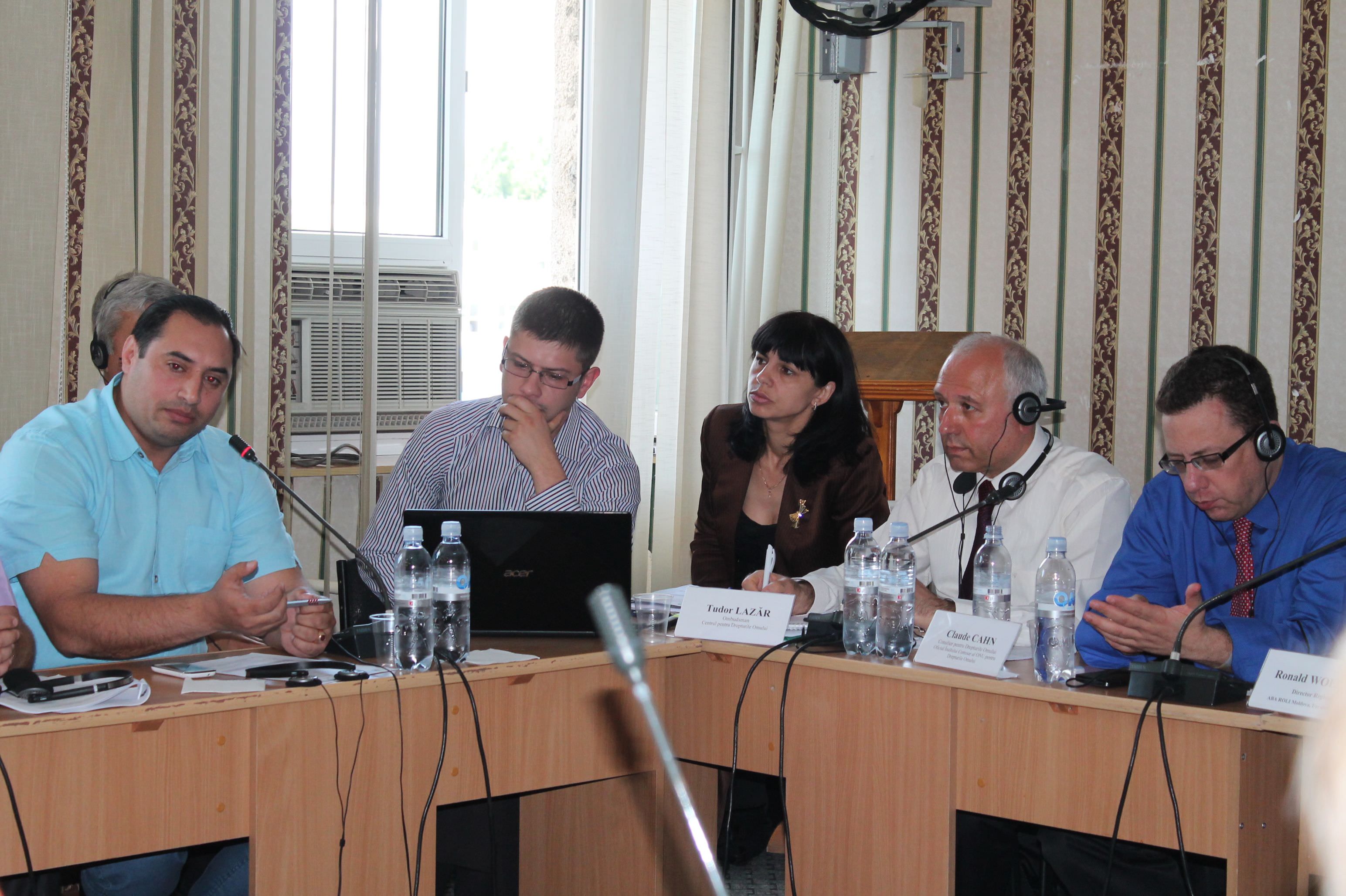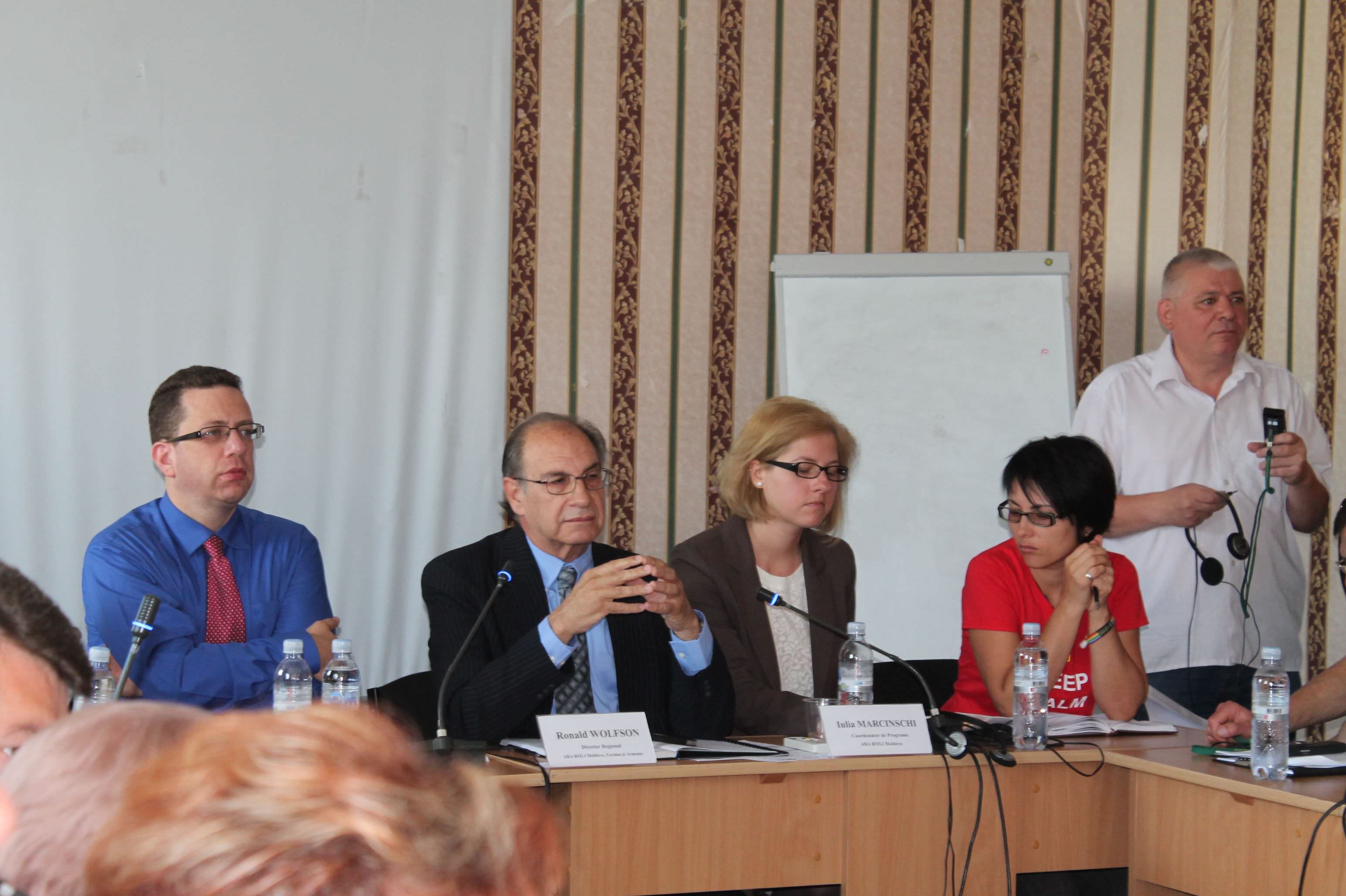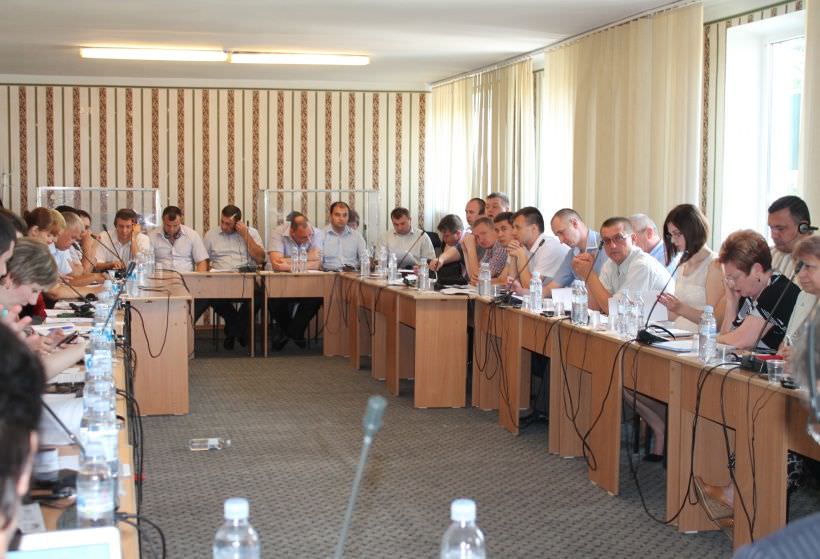
The meeting was organized by the Centre for Human Rights in cooperation with the United Nations Office of the High Commissioner for Human Rights (OHCHR), American Bar Association / Rule of Law Initiative (ABA ROLI). The meeting was attended by over 60 participants, including prosecutors, judges, investigators, representatives of civil society. The first round table with this issue took place on April 30 in Chişinău.
During the first session were discussed issues regarding hate crimes, experiences and visions of minority groups with the participation of representatives from baptist religious community, Jewish charity Center "Hassad Jacob", GENDERDOC-M, National Roma Centre. In the second session the lawyer of the Council on the Prevention and Elimination of Discrimination and Equality Assurance, Mr. Dumitru Rusu, presented a Memorandum on evaluation of legislation and practices related to offences motivated on bias. There was an exchange of views on national legislation and practice of investigation and examination of criminal cases and contraventional related to hate crimes.
The conclusions on the discussions have been made by Human Rights Adviserin the Office of the UN High Commissioner for Human Rights Mr. Claude Cahn, regional director of the American Bar Association / Rule of Law Initiative, Mr, Ronald Wolfson.
The Parliamentary advocate Mr.Tudor Lazăr in his speech expressed the belief that discussions on hate crimes combat were useful for participants, who shared their experience or made some clarifications regarding the working methods in the investigation of such categories of cases.
The Ombudsman noted that lately more frequently are founded situations in which, after documenting, investigating and examination of anti-discrimination discourses, the court obliges people, regardless of status they have to apologize to those stated. I think soon we will be witnesses of situations in which such person will bear contraventional and criminal responsibility. It all depends on how the case will be documented, Tudor Lazăr said.
The Ombudsman welcomed the fact that lately it is managed to exceed the threshold of lack of knowledge and fear in investigation and examination of such cases. The Ombudsman has revealed the importance of improving the existing legal framework, implicitly taking into account the suggestions of those present at the round table, from the position of practitioners, those who directly operate with legal norms.
Tudor Lazăr highlighted the role of civil society in combat of hate crimes, implicitly by public awareness on specific cases of discriminatory manifestation.
Hate crimes are more serious than other types of crimes because they threaten the peace and security of society, they lead to strife, the division, the destruction of some groups because they are not part of their group, concluded the Ombudsman. Only through tolerance we can exist together, regardless of the criteria that distinguish us, said Tudor Lazăr.