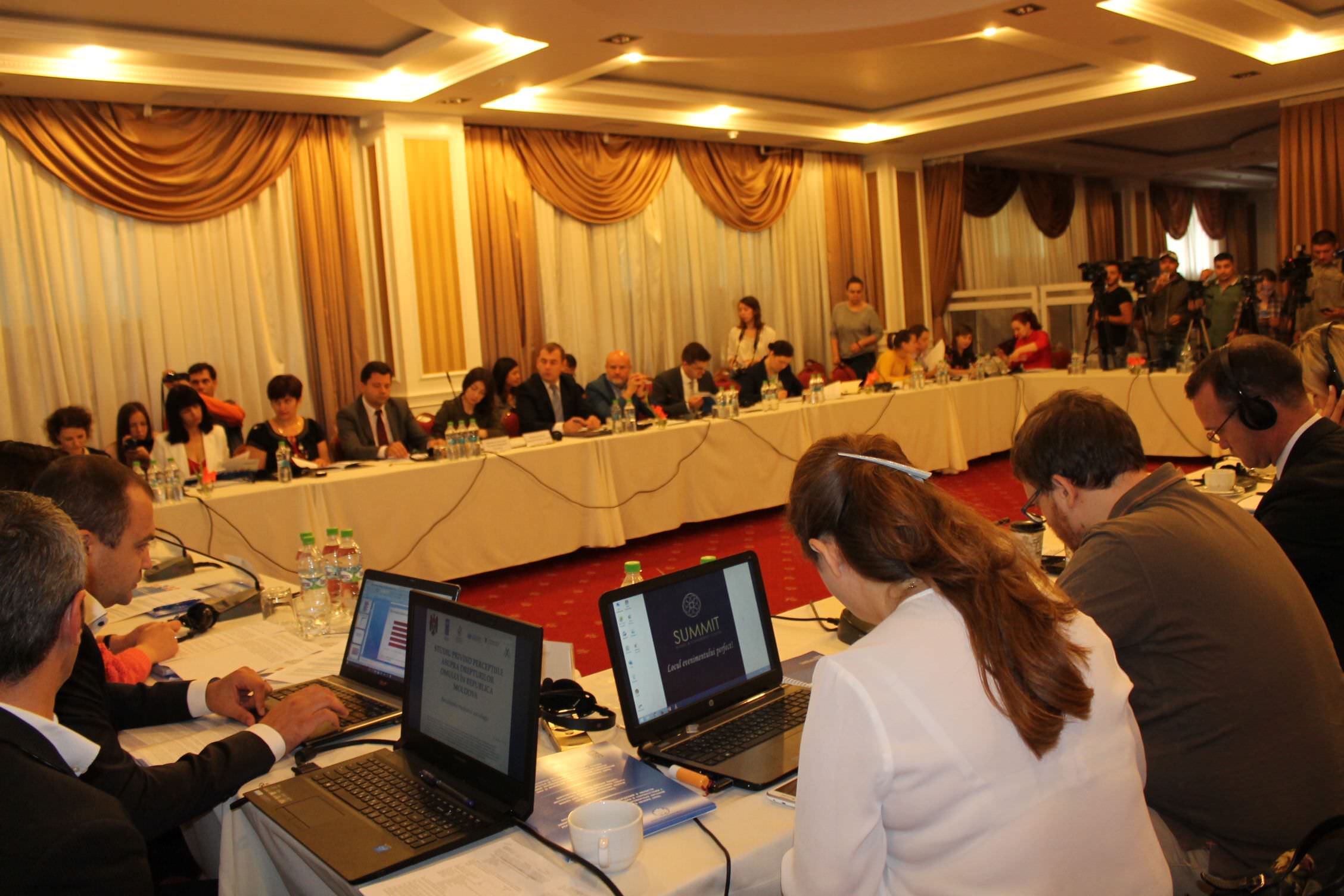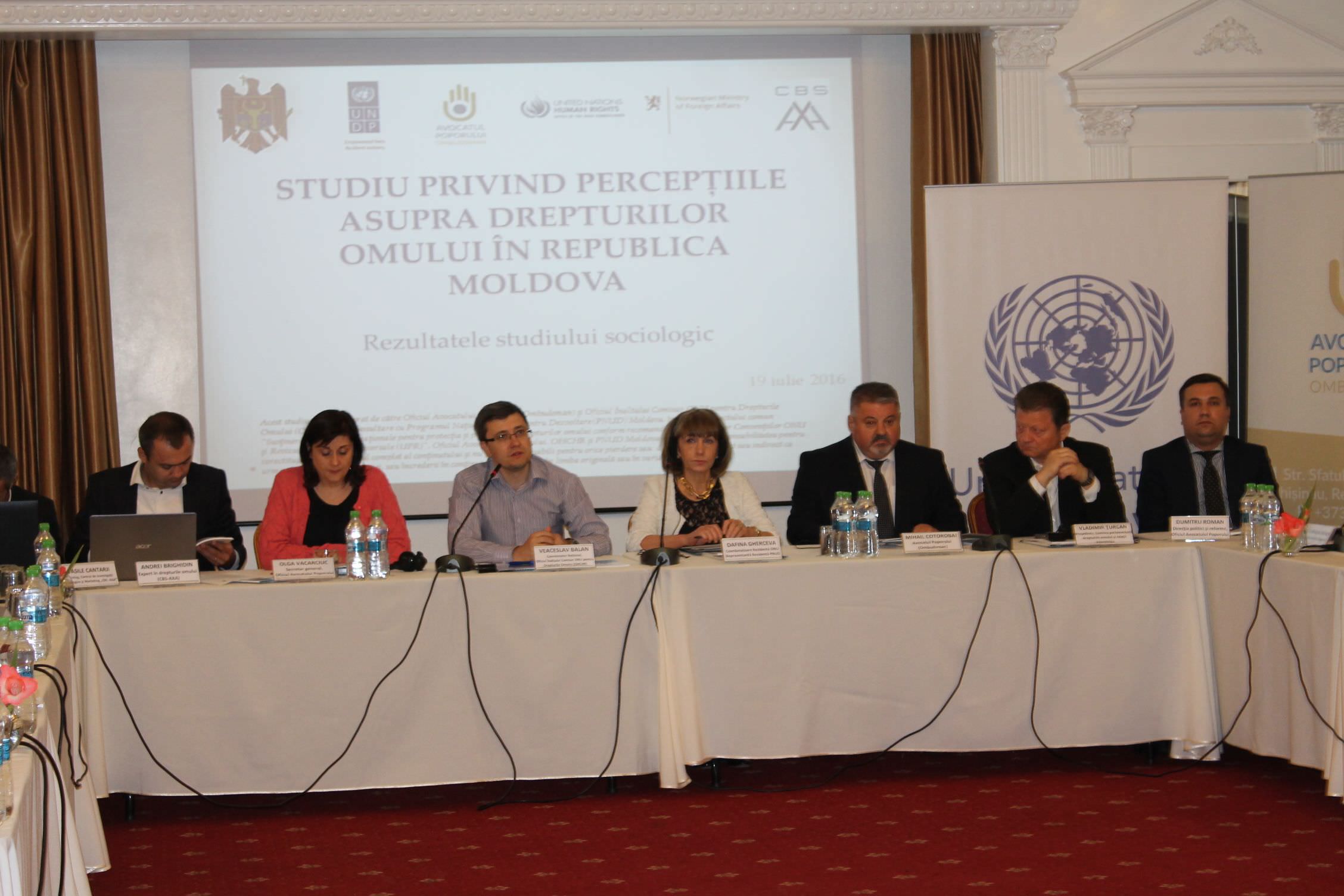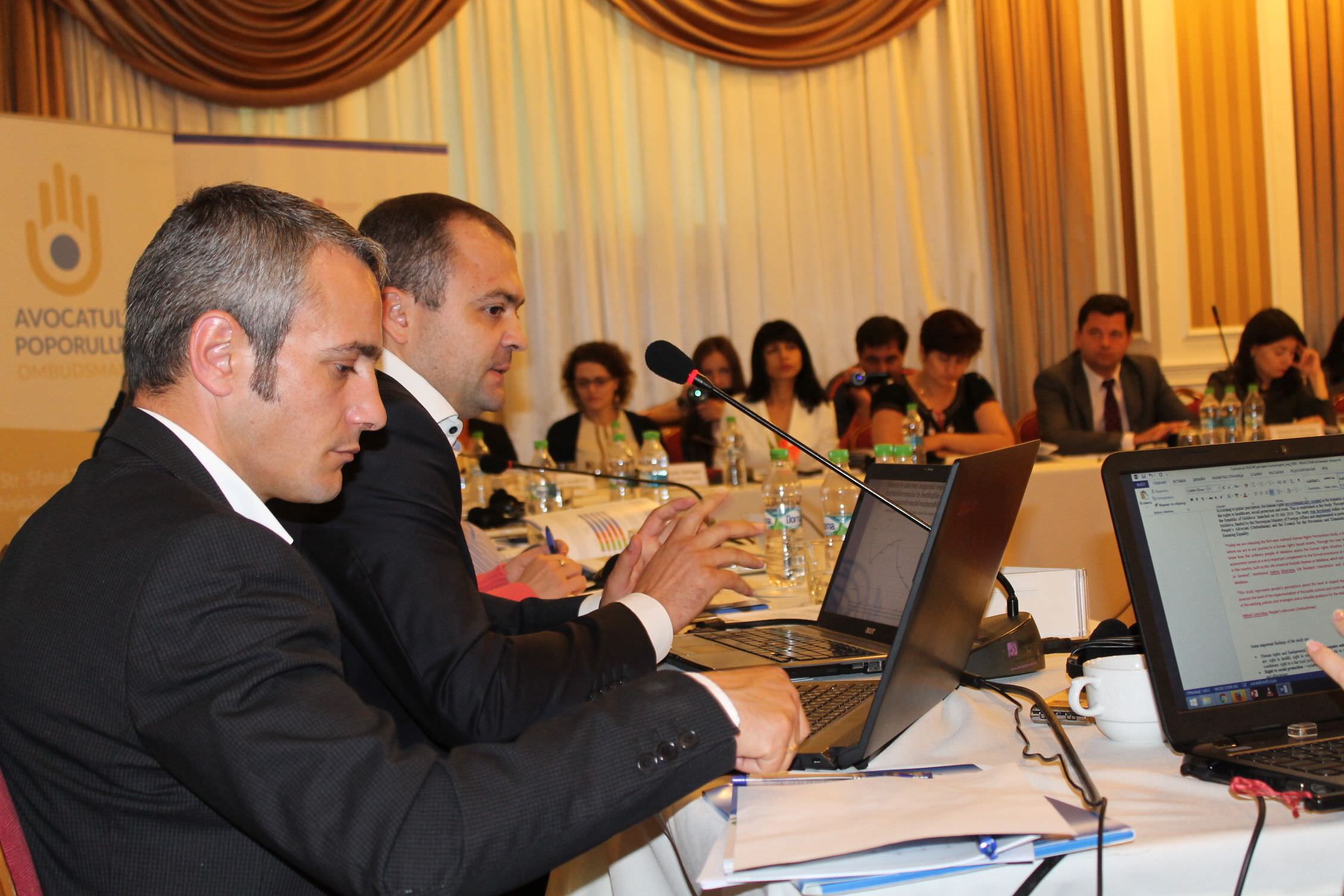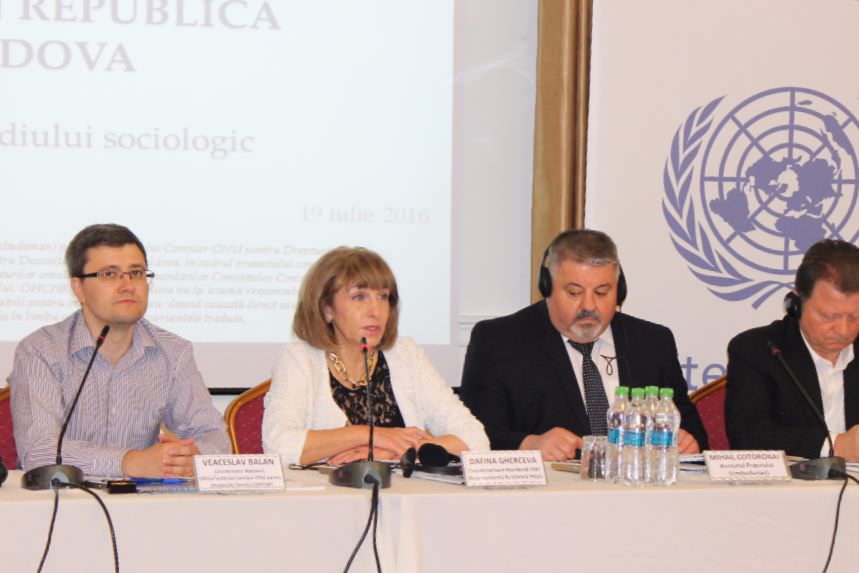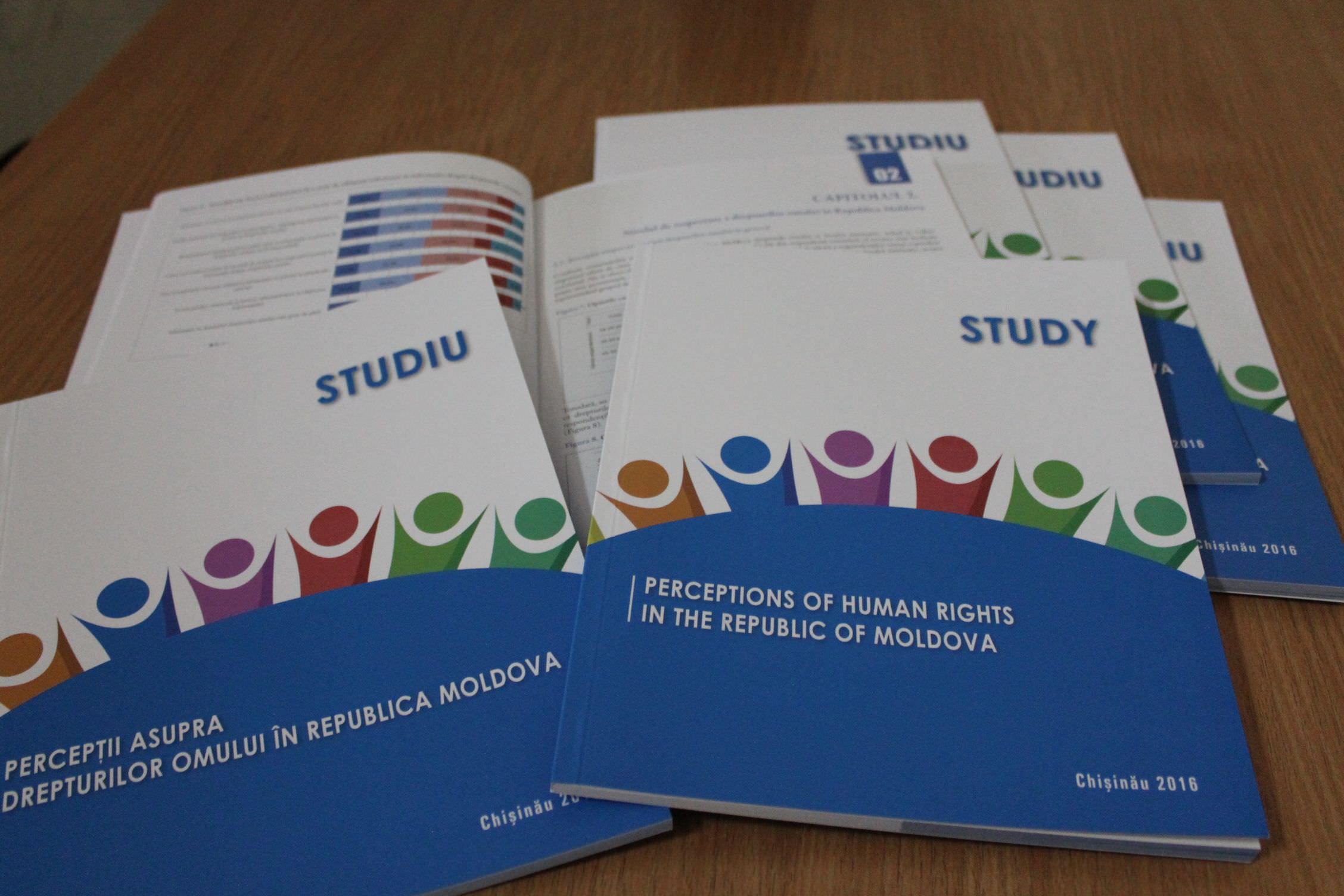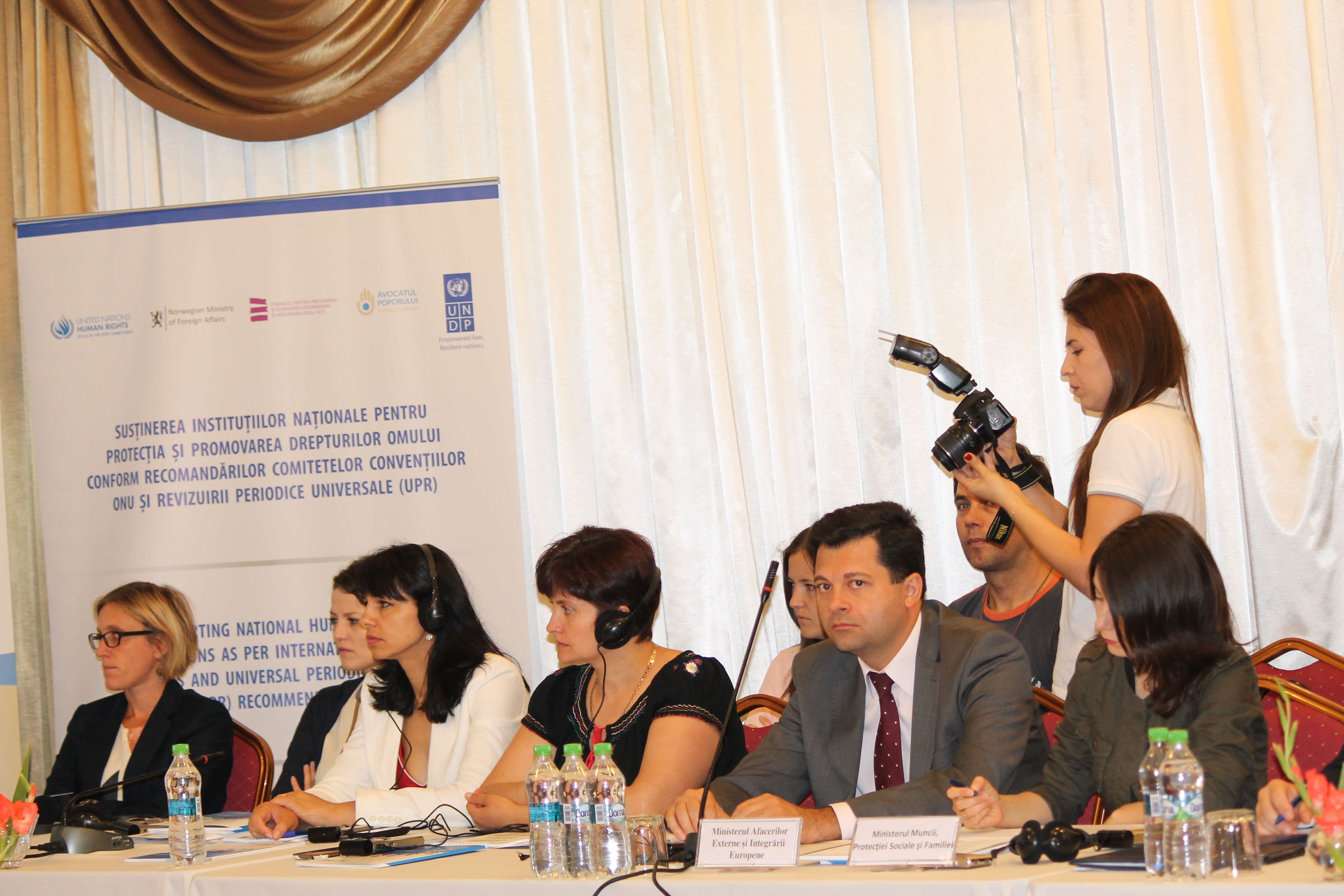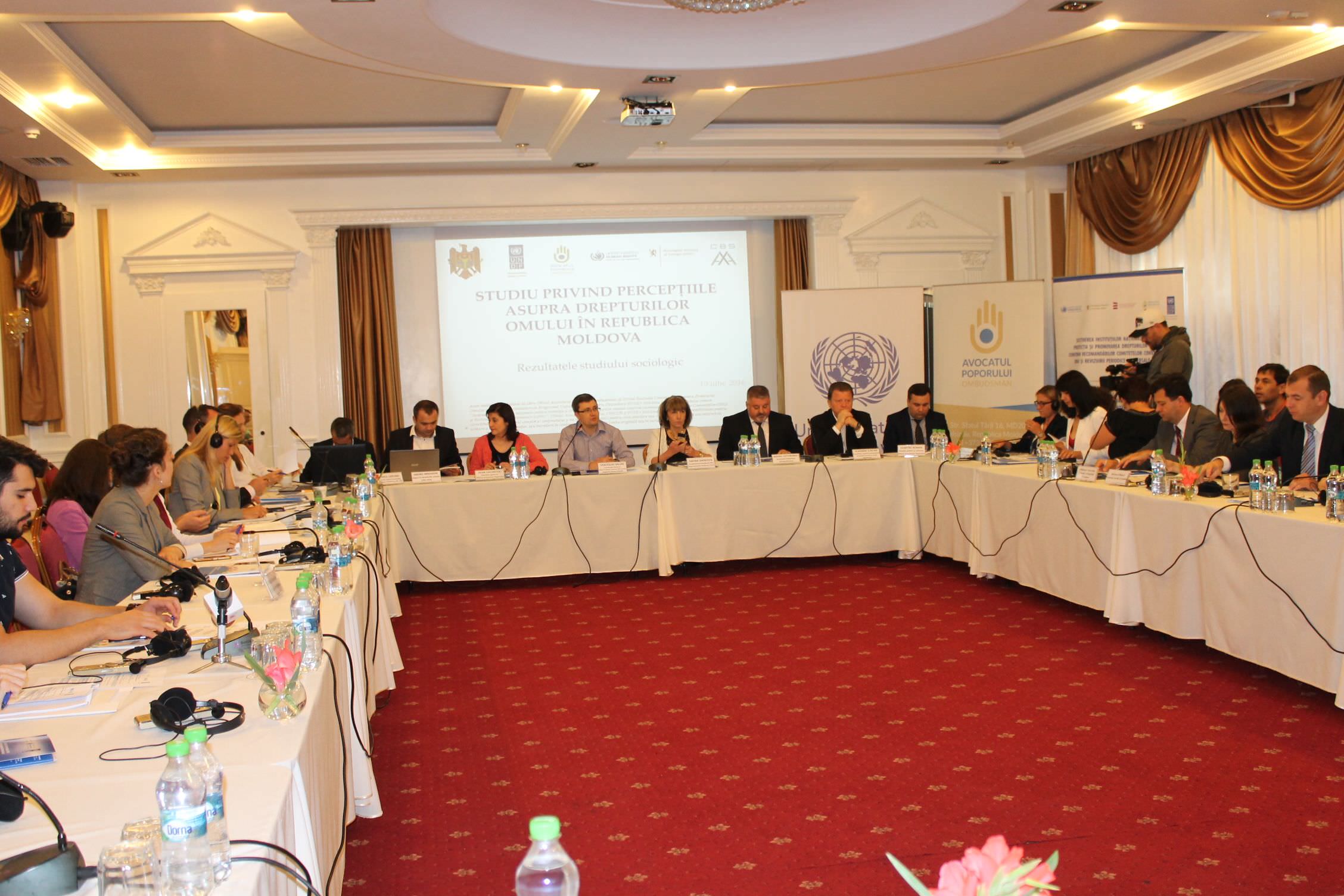
As perceived by the population, in Moldova human rights are systematically violated, particularly the right to health, social protection and employment. This is the conclusion of the study "Perceptions of human rights in the Republic of Moldova", presented on July 19, 2016. The research was developed under a joint UN project in Moldova, funded by the Ministry of Foreign Affairs of Norway and implemented in partnership with the Office of the Ombudsman and Council on the Prevention and Elimination of Discrimination and Ensuring Equality.
The study was conducted for the Office of the Ombudsman in order to identify the existing problems in the field from the perspective of the average citizen, as well as for the measurement of development in the area in recent years.
The survey data reveals that, in the opinion of 61% of the respondents, the right to health is considered the most relevant and important one and it requires more attention, followed by the right to social protection, with 44.6% affirmative answers, the right to education - 31.5%, labor rights and favorable conditions of work - 27.9%, the right to a fair trial (to justice) - 19.9%.
68.1% of respondents believe that the right to a fair trial is poorly ensured or not at all, compared with about 12.4% of respondents believing that this right is respected in large or very large extent. Among respondents interviewed in group discussions distrust with regard to Moldovan justice persists. It has been said that justice is selective and marked by corruption. According to respondents, people with physical or psychosocial disabilities are poorly protected, the percentage of those who consider this being about 72.7%.
According to the respondents, the most respected right in Moldova is the freedom of movement, with about 65% of the responses "good" and "very good", followed by the right to property – over 60% positive answers, and rights such as: right to freedom of conscience, thought and religion; right to gather/organize; right to elect and be elected; right to being informed/access to information; freedom of opinion and expression; right to water and sanitation, they have accumulated between 50% and 60% of the responses.
According to the findings of the study, in Moldova human rights are systematically violated, in view of the response given by 68.2% of respondents. However, in the opinion of 95% of those interviewed human rights in Moldova are not respected either systematically or occasionally.
Respondents believe that leading institutions of the state, along with the police force are in most cases responsible of human rights violations and have little contribution to their accomplishment and protection.
One of the important findings of the study is that the level of public information on human rights is low. Only half of respondents believe are rather well informed in this context, compared to only 8.3% of those who said they are very well informed. Awareness is higher in cities – 59.7% compared with only 41.2% of respondents from villages.
Most of the people, 80.7% get their information with reference to human rights from the media (radio / TV / print media).
About 65.4% of respondents believe that the Parliament and the Government are the institutions that largely violate human rights, followed by health institutions (hospitals, medical points), police, courts, city halls.
Present at the event, the UN Resident Coordinator and UNDP Resident Representative in Moldova, Dafina Gercheva, noted the significance of the survey, encouraging public authorities to make use of its data in the development of new policies in the sphere of human rights. “Today we are releasing the first-ever national Human Rights Perceptions Study, a study which shows to all of us where we are in our journey to a human rights based society. Through the now released perceptions study we know how the ordinary people of Moldova assess the human rights situation in the country. This “popular” assessment comes as a very important complement to the formal procedures of assessing human rights situation in the country, such as the UN Universal Periodic Review on Moldova, which will take place in November this year in Geneva”, mentioned Dafina Gercheva, UN Resident Coordinator and UNDP Resident Representative in Moldova.
The People’s Advocate (Ombudsman), Mihail Cotorobai, stressed the importance of the study to estimate the impact of state policies on the situation of human rights in the Republic Moldova planning new strategic actions to improve the situation.
The Ombudsman said that the study also provides the opportunity to check the degree of compliance of the Ombudsman Institution vision with the situation of human rights but also the revaluation, if necessary, of the priorities of its activity.
Mihail Cotorobai also said that, broadly, respondents' perceptions coincide with those of the Office of the Ombudsman, similar findings were made by both ombudsmen (nt. People’s and Children’s Advocate) and employees of the institution based on petitions, appeals and from monitoring the situation in the field. It is concerning that, according to the respondents, the leading institutions of the state, along with the police force are in most cases violating human rights and have little contribution to their protection.
The president of the Parliamentary Committee for Human Rights and Ethnic Relations, Vladimir Turcan, believes that this study should become a guide to authorities in implementing the measures needed to improve the state of affairs in the sphere of human rights. This study reflects the voice of the people, the public opinion regarding human rights in our country. Vladimir Turcan said that the study should constitute the starting point for developing the NHRP 3.
Secretary General of the Office of the People’s Advocate, Olga Vacarciuc, reminded that so far two action plans have been implemented on human rights, but the impact of these policy documents on the human rights situation in the country was never assessed. The Ombudsman’s Institution proposed that NHRP 2 should include a sociological study at the end of document implementation, along with the realization of a documentary film on the topic, but due to the lack of financial resources it was never realized.
Olga Vacariuc thanked the partners of the Office of the Ombudsman - UNDP and OHCHR for supporting the development of this study, and for accepting the idea of concept proposed by the Ombudsman Institution.
The National Human Rights Coordinator of the Office of the High Commissioner for Human Rights (OHCHR), Veaceslav Balan, advocated for developing a national plan that is to include all human rights and ought to be taken as the basis of all sectoral documents and integrated into other policy documents.
Veaceslav Balan also talked about the opportunity of returning to the idea of creating focal human rights groups in public institutions, in order to coordinate and monitor the actions of this plan.
The full study in Romanian (original), Russian and English, can be accessed on the websites: www.ombudsman.md (thematic reports) and www.un.md (publications).