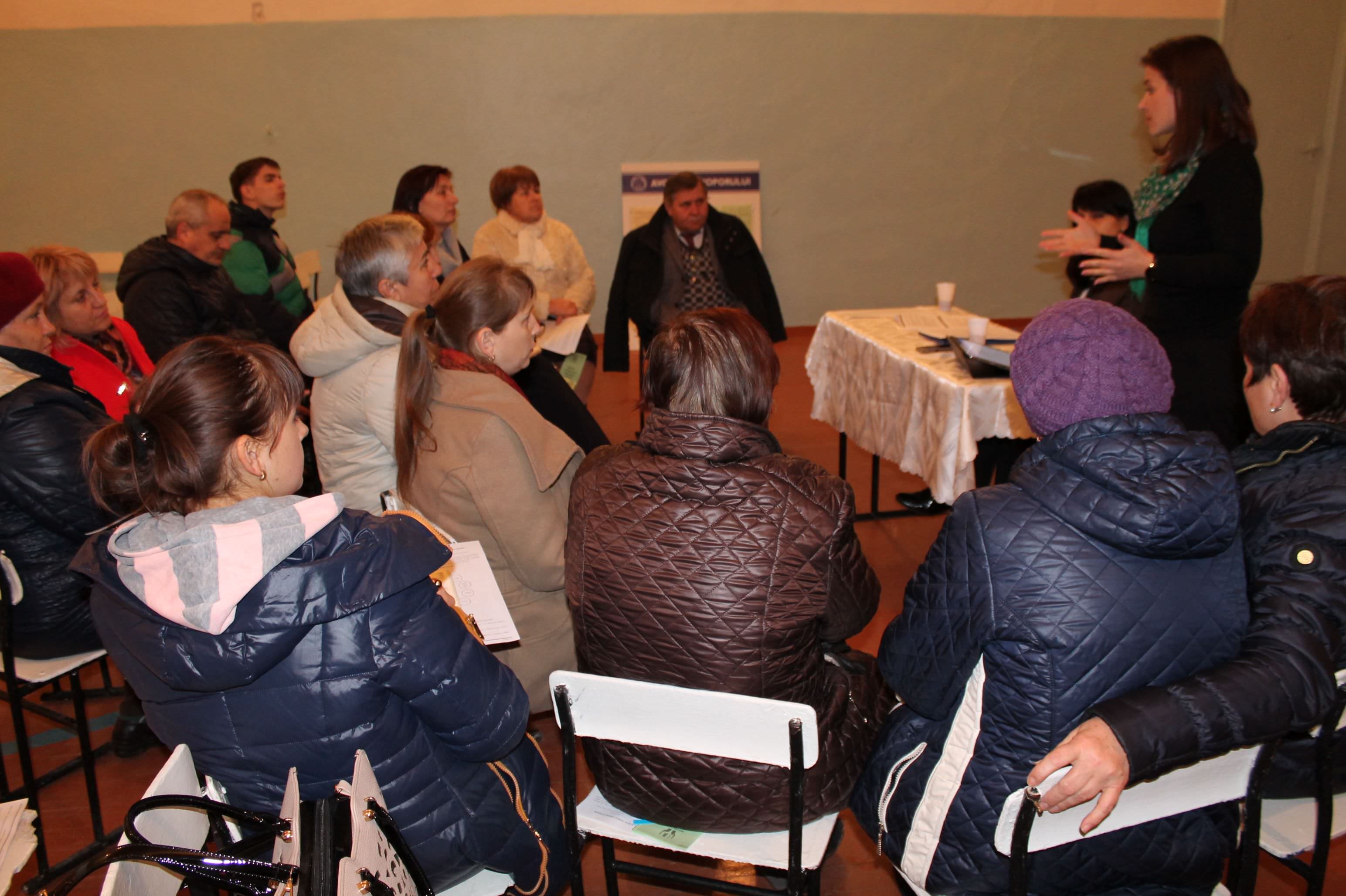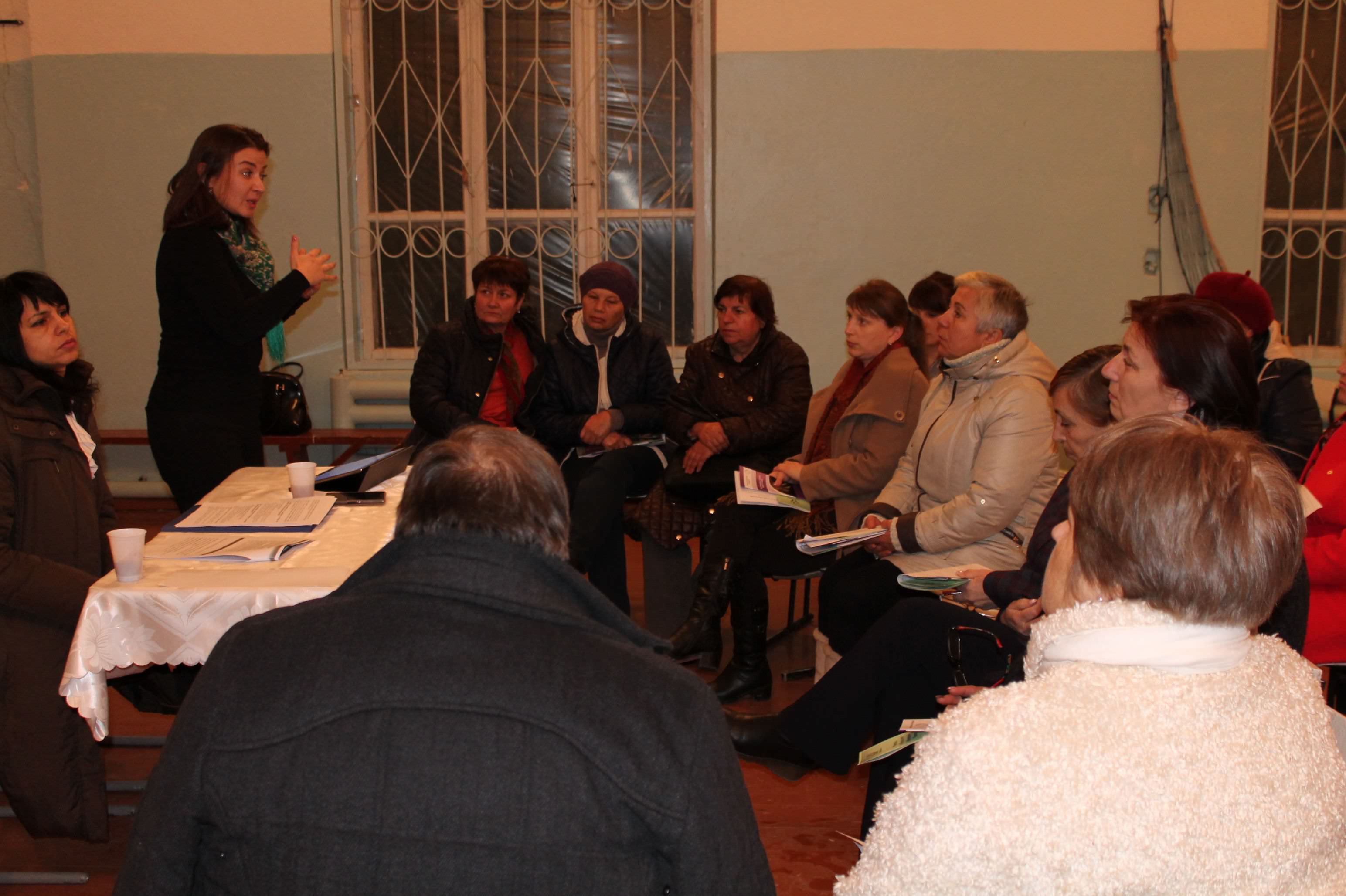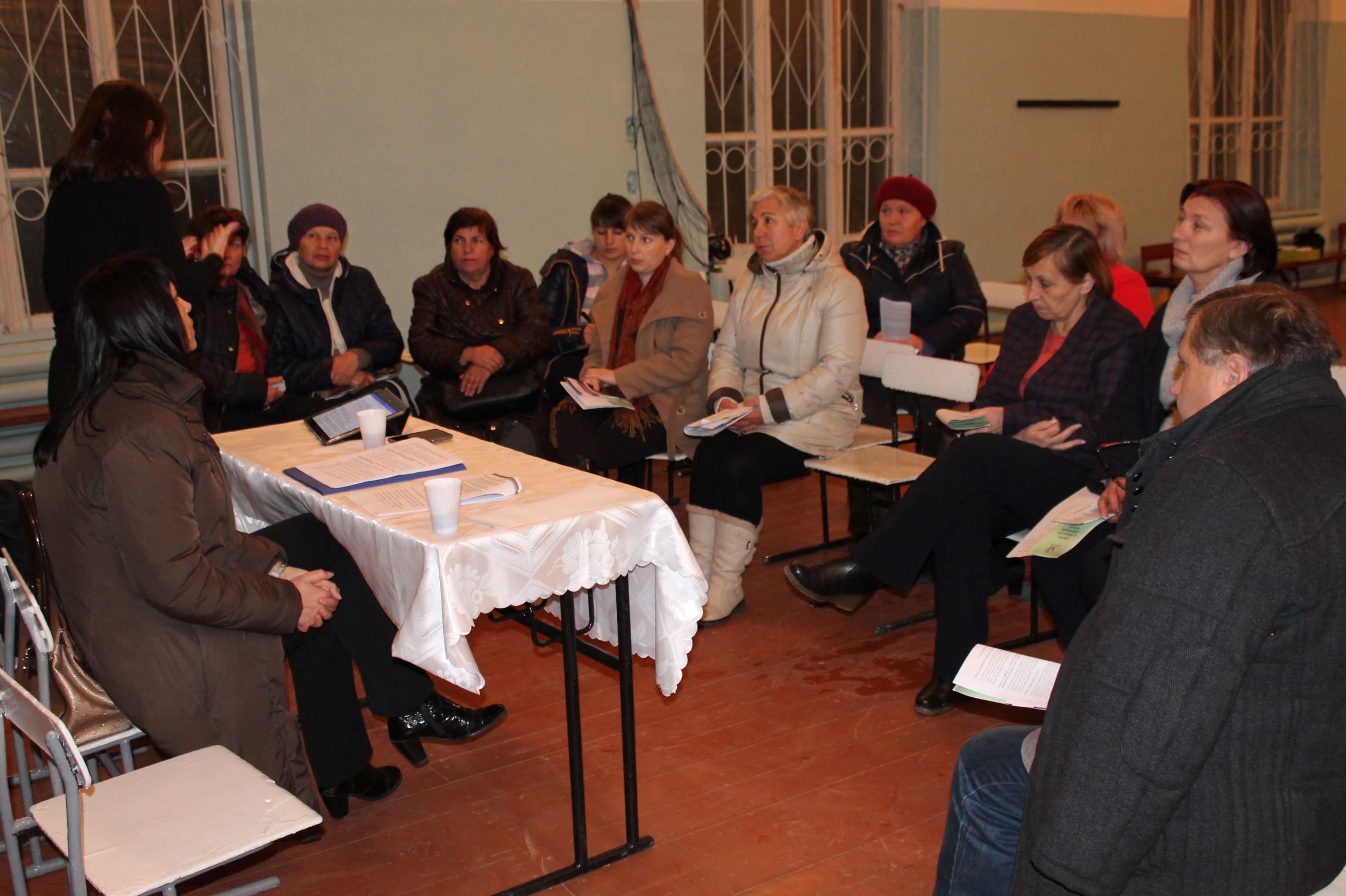
During the International Campaign entitled “16 Days of Activism against Gender-Based Violence”, the employees of the Ombudsperson's Office, Natalia Visanu and Svetlana Rusu, and the representative of RCTV “Memoria”, Cezara Dilevschi, conducted a visit in Ghidighici village. About 20 villagers participated in discussions about the domestic violence phenomenon, prejudices and stereotypes that cause gender-based violence, types of domestic violence and its main characteristics, where domestic violence victims can address for psychological and legal counseling, rehabilitation or shelter. The meeting was attended by the mayor of the village, Serafim Isac, the director of the village secondary school and some teachers, the social worker, and other members of Ghidighici village.
The representative of the Ombudsperson's Office, Natalia Visanu, spoke about the current situation on domestic violence crimes in the Republic of Moldova, stressing that the number of domestic violence cases reporting and protection ordinances issued upon request increased during the last 4 years. In this context, it was mentioned the GPI statistical data that showed an increasing in the number of serious crimes against lives and health committed in the Republic of Moldova from 63 cases in 2008 to 2270 cases in 2014.
The psychologist from RCTV “Memoria” highlighted several aspects of the cyclical nature of the domestic violence and the myths related to this phenomenon, the nature of the perpetrators, which in most cases are men, the reasons they become violent with their families. Cezara Dilevschi referred to the services provided by RCTV “Memoria” and other specialized rehabilitation centers, shelters, organizations that support abused women.
The officer of the Ombudsperson's Office, Svetlana Rusu, spoke about the legal mechanisms to prevent domestic violence and protect victims of domestic violence, which are the courts to which they can address.
Ghidighici villagers attending the meeting asked many questions, referring to a number of relatively recent cases of domestic violence in the village, including a case of domestic violence against a minor. The speakers mentioned that, for various reasons, in these cases victim protection mechanisms did not functioned normally and the courts, which by law must train themselves for solving the problem, failed to be involved and to react promptly.